| 📅 Phase | ⏱️ Timing | 🎯 Primary Goal | ✅ Key Exercises | 🚫 Avoid |
|---|---|---|---|---|
| Phase 1 Foundation |
Days 1–14 | Prevent blood clots, restore basic range of motion, reactivate quads | Ankle pumps (every hour) · Quad sets · Straight leg raises · Heel slides · Short walks with walker | Pillow under knee · Skipping sessions · Prolonged sitting |
| Phase 2 Range of Motion |
Weeks 3–6 | Achieve 90° bend · Transition from walker to cane · Begin light cardio | Stationary cycling (10–15 min, low resistance) · Continued quad sets · Standing knee bends with support · Short walks building daily | Elliptical · Deep bending · Kneeling · High-resistance cycling |
| Phase 3 Strength Rebuild |
Weeks 6–16 | Rebuild quadriceps · Improve balance · Return to daily activities | Seated resistance band extensions · Mini squats (0–30°) · Step-ups (4–6 in step) · Standing calf raises · Stationary cycling with light resistance | Running · Squats below 90° · Jumping · Sports with pivoting |
| Phase 4 Return to Life |
Months 4–12 | Full independence · Return to hobbies · Long-term joint protection | Progressive walking · Swimming · Cycling · Japanese walking intervals · Golf, dancing, doubles tennis (with clearance) | Running · Basketball · Football · Racquetball · Marathon training |
| Long-Term Maintenance |
Year 1 onward | Protect implant · Maintain strength · Prevent muscle loss | 2–3x/week resistance training · Daily walking · Low-impact cardio · Balance exercises | High-impact exercise · Allowing muscle loss (sarcopenia) · Long periods of inactivity |
Sources: American Academy of Orthopaedic Surgeons (AAOS) · Hospital for Special Surgery (HSS) · Healthline Rehabilitation Timeline · PMC Resistance Exercise after TKA (2009) | Over 90% of total knee replacements function effectively 15 years post-surgery with proper exercise maintenance
More than 700,000 total knee replacements are performed in the US every year, and the majority of patients are over 60. The surgery itself takes less than two hours. The recovery — the part that actually determines your long-term outcome — takes up to a year. And the single biggest predictor of how well you recover is not the surgeon, not the implant, and not your age.
It’s whether you exercise consistently, correctly, and progressively throughout every phase of rehabilitation. Seniors who follow a structured exercise program after knee replacement surgery return to independent, active lives faster, maintain better long-term joint function, and dramatically reduce the risk of falls and re-injury. Those who skip or underdo their rehab frequently end up with stiff, weak knees that function worse than the arthritic ones they replaced.
💡 HSS Physical Therapist Vincent Luppino DPT: ‘PT after knee replacement is like a pyramid. The foundation is improving your range of motion, which is the focus for the first six weeks. The next layer is rebuilding strength, which happens from week six through week sixteen.’ By month three you’re about 75% recovered — but the last six to twelve months are when you fully recover. Don’t give up on the program too early.
The 4-Phase Recovery Timeline — What to Expect and When
Phase 1 — Days 1–14: Hospital and Home (Foundation)
Movement begins within 24 hours of surgery. A physical therapist will have you standing and taking your first steps with a walker before you leave the hospital — often the same day as surgery. This is not optional and not comfortable, but it is essential. Early movement prevents blood clots, reduces swelling, and starts the muscle reactivation process that will determine your long-term recovery.
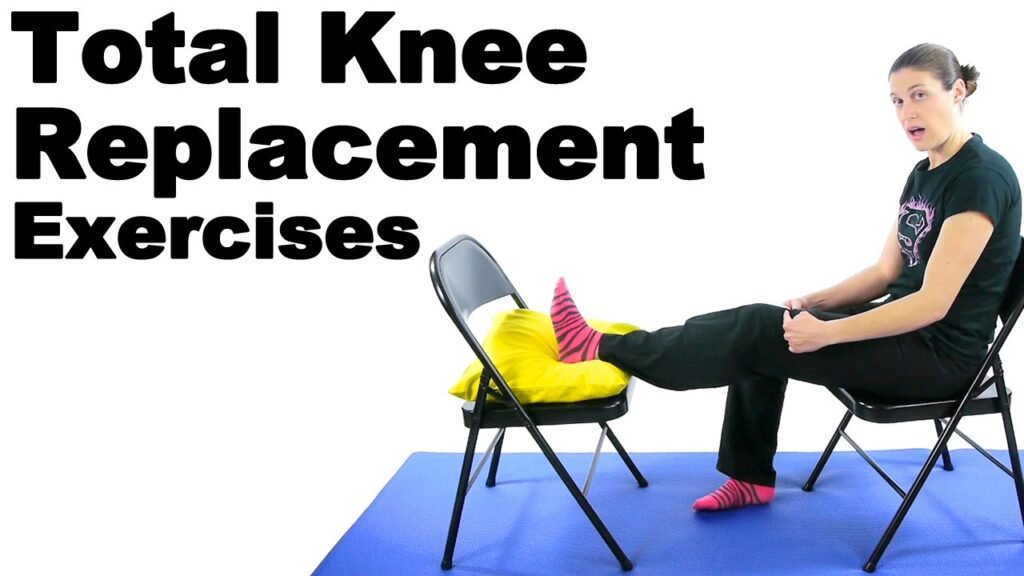
The exercises in Phase 1 are simple but non-negotiable: ankle pumps (done every hour to maintain circulation), quadriceps sets (tightening the thigh muscle with leg straight), straight leg raises, and heel slides. These take 20–30 minutes total per session and should be done 2–3 times per day. Pain is expected — it does not mean you should stop.
- Ankle pumps — 2–3 minutes every hour. Non-negotiable for preventing blood clots.
- Quad sets — tighten thigh, hold 5–10 seconds, repeat until fatigued. Reactivates the quadriceps that protect your new joint.
- Straight leg raises — lift leg several inches, hold, lower slowly. Builds the quad strength essential for everything that follows.
- Heel slides — slide heel toward buttocks, bending the knee. Restores range of motion from day one.
⚠️ Do NOT put a pillow under your knee while sleeping or resting. This creates a flexion contracture — a permanent bend in the knee — that significantly limits long-term recovery. Keep the leg flat or elevated under the calf.
Phase 2 — Weeks 3–6: Outpatient PT Begins (Building Range of Motion)
By week 3, most seniors transition from a walker to a cane. Swelling is reducing and mobility is improving. Outpatient physical therapy begins in earnest — typically 2–3 sessions per week for this phase. The primary goal is achieving full range of motion: the knee needs to bend to at least 90 degrees for basic daily function (sitting, stair climbing) and ideally 110–120 degrees for longer-term independence.
Stationary cycling becomes the cornerstone exercise of this phase. It provides low-impact range of motion work and light cardiovascular conditioning without stressing the joint. Start with 10–15 minutes twice daily at very low resistance, building to 20–30 minute sessions 3–4 times weekly. The seat height matters — set it high enough that the knee only bends to about 90 degrees at the lowest point.
🔬 American Academy of Orthopedic Surgeons: Physical therapy should begin within the first 24 hours after surgery. Patients who start immediately have significantly better outcomes — faster return to independent walking, greater range of motion at 3 months, and lower rates of complications.
Phase 3 — Weeks 6–16: Strength Rebuilding (The Critical Phase)
This is where most of the functional recovery happens — and where most seniors either succeed or fall short. The quadriceps muscle weakens significantly in the months before knee replacement surgery due to pain-avoidance and disuse. Rebuilding it after surgery is the single most important factor in long-term knee function, fall prevention, and independence.
Seated resistance band exercises are ideal during this phase — they provide progressive overload without joint stress and can be done safely at home between PT sessions. The 10-minute chair exercise guide provides a complete routine that maps well to this recovery phase, requiring no floor work and no equipment beyond a band and a sturdy chair.
- Seated knee extensions with band — directly rebuilds the quadriceps
- Mini squats (0–30 degrees only) — functional lower body strength without excessive joint stress
- Step-ups on a low step (4–6 inches) — trains the stair-climbing pattern safely
- Standing calf raises with support — rebuilds the ankle stability and calf strength critical for fall prevention
- Short-arc quad (SAQ) extensions — the most targeted quadriceps exercise for post-TKR rehabilitation
✅ Key principle: Progress is measured in weeks, not days. If your knee is more swollen and painful the day after a session than it was before, you overdid it. The goal is a ‘happy knee’ — challenged but not irritated.
Phase 4 — Months 4–12: Return to Active Life (Long-Term Maintenance)
By month 3, you’re approximately 75% recovered. The remaining 25% — the difference between a functional knee and a truly excellent outcome — comes from sustained exercise across the following six to twelve months. Most seniors discontinue their home exercise program at this point. The ones who keep going experience dramatically better long-term function.
Low-impact aerobic exercise becomes the priority: walking progressively further each week, swimming, stationary cycling, and Japanese walking’s interval method — alternating fast and slow intervals — which provides cardiovascular conditioning and strength stimulus without the repetitive impact of jogging. By month 6, most seniors can return to golf, dancing, cycling, and doubles tennis.
💡 Over 90% of knee replacements continue to work effectively 15 years after surgery. The longevity of your implant depends primarily on maintaining the muscle strength around the joint and avoiding high-impact activities like running and jumping. Low-impact exercise for life is the prescription.
Exercises to Avoid After Knee Replacement — And What to Do Instead
The most common mistakes seniors make in knee replacement recovery are not working hard enough (under rehabilitation) and working the wrong way (doing exercises contraindicated for their implant). Here’s what the research says to avoid:
- Running and jogging — the repetitive impact load significantly accelerates implant wear. Walking and cycling provide all the cardiovascular benefit without the damage.
- High-impact sports — basketball, football, racquetball. The sudden cutting, pivoting, and landing forces exceed what the implant is designed to withstand.
- Deep squats below 90 degrees — excessive flexion stresses the patellar component. Mini squats (0–30 degrees) build the same functional strength safely.
- Kneeling — until explicitly cleared by your surgeon, typically not before 3 months and sometimes longer.
- The elliptical in the first 12 weeks — the motion creates shear stress on components that are still integrating with bone tissue.
- Sitting for extended periods — prolonged sitting causes stiffness and swelling. Aim to stand and move for 5 minutes every 45 minutes.
The Nutrition That Accelerates Recovery — Most Seniors Miss This
Exercise after knee replacement is only half the recovery equation. The other half is the nutritional environment that determines how fast your body repairs the surgical site, rebuilds muscle tissue, and reduces the inflammation that drives post-operative pain and swelling.
Protein — The Most Critical Recovery Nutrient
Surgical recovery demands significantly higher protein intake than normal daily life. Tissue repair, muscle rebuilding, and immune function all require amino acids — and the body’s ability to use dietary protein efficiently is reduced during the inflammatory post-operative period. Research supports 1.2–1.6g of protein per kg of bodyweight daily during recovery, distributed evenly across three meals. The protein-first eating approach — eating your protein source before anything else at each meal — ensures these targets are consistently hit even when appetite is reduced post-surgery.
Anti-Inflammatory Foods — Addressing the Root Cause of Recovery Pain
The inflammatory response after surgery is necessary for healing — but chronic excess inflammation slows recovery and amplifies pain. The anti-inflammatory dietary pattern that protects against joint degeneration long-term is equally powerful during the acute recovery phase. Fatty fish, berries, leafy greens, extra virgin olive oil, and turmeric all actively reduce the inflammatory cytokines that drive post-surgical pain and swelling.
Fiber — Supporting the Gut During Opioid Recovery
Post-surgical opioid pain medication causes significant constipation — a frequently underestimated recovery complication that reduces mobility and comfort. High dietary fiber intake from legumes, vegetables, oats, and seeds directly counteracts this effect. The 5 daily longevity foods cover both the anti-inflammatory and fiber requirements simultaneously.
Fall Prevention During Recovery — The Critical Safety Window
The 6 weeks following knee replacement surgery represent one of the highest fall-risk periods in a senior’s life. The combination of altered gait mechanics, pain medication effects, reduced proprioception in the new joint, and unfamiliar movement patterns creates a perfect storm for falling — and a fall on a fresh knee replacement is a serious complication.
- Wear supportive footwear — the right walking shoe with non-slip soles and good ankle support is essential throughout recovery. Socks alone on smooth floors are a fall risk.
- Clear your home — remove rugs, loose cords, and any floor obstacles from all pathways you use regularly.
- Install grab bars — in the shower, beside the toilet, and along any stairs. These are non-negotiable, not optional.
- Build balance daily — even before your knee is ready for balance-specific exercises, the morning micro workout routine includes ankle circles and seated marching that safely rebuild the proprioceptive system.
- Use your walking aid — pride is not worth a fall. Use the walker or cane your surgeon prescribed for as long as it’s prescribed.
💡 Research shows that quadriceps weakness — the defining muscular deficit after knee replacement — is the primary physical predictor of fall risk. Every resistance exercise session you complete is directly reducing your fall risk, not just rebuilding your knee.
Frequently Asked Questions
How soon can seniors exercise after knee replacement surgery?
Exercise begins within 24 hours of surgery — ankle pumps and quad sets start in the recovery room. Walking with a walker begins on Day 1. The American Academy of Orthopedic Surgeons recommends starting physical therapy exercises immediately after surgery. Waiting is not safer — early movement prevents blood clots, maintains circulation, and begins the muscle reactivation that determines recovery quality.
What is the best exercise after knee replacement for seniors?
In the first 6 weeks: ankle pumps, quad sets, heel slides, straight leg raises, and stationary cycling. From week 6–16: progressive resistance training focusing on quadriceps — seated resistance band exercises, mini squats, and step-ups. After month 4: walking progressively, swimming, and cycling for long-term cardiovascular health and joint maintenance. The specific program should always be guided by your physical therapist.
How long does it take a senior to recover from knee replacement?
Most seniors walk without assistance by week 6 and return to most daily activities by month 3. Full recovery — where the knee functions optimally and long-term strength is fully rebuilt — takes 6–12 months. Over 90% of knee replacements function well 15 years after surgery when patients maintain a consistent exercise program and healthy lifestyle.
Can I walk normally after knee replacement?
Yes — and for most seniors, walking after knee replacement is significantly better than before surgery. Most patients are fully weight-bearing within days. By 6 weeks, most walk with a cane or without assistance. By 3 months, normal walking mechanics are largely restored. Progressive daily walking targets — starting short and building week by week — are the most important long-term exercise for implant health.
What exercises should I avoid after knee replacement?
Running, jogging, jumping, deep squats below 90 degrees, high-impact sports, and the elliptical in the first 12 weeks. See our full guide to exercises seniors should stop doing for the principles that apply both pre- and post-replacement. The goal is functional fitness through low-impact movement — not high-impact performance.
Does walking help knee replacement recovery?
Walking is the single most recommended activity for knee replacement recovery by the American Academy of Orthopedic Surgeons. It improves circulation, reduces swelling, rebuilds walking mechanics, maintains cardiovascular health, and provides gentle joint loading that helps the implant integrate with bone tissue. Start with short indoor walks and build duration progressively each week. Supportive walking shoes are essential — the right footwear reduces joint stress and fall risk simultaneously.
How does nutrition affect knee replacement recovery?
Significantly. Protein is the most critical nutrient — 1.2–1.6g per kg of bodyweight daily supports tissue repair and muscle rebuilding. See how much protein seniors actually need. Anti-inflammatory foods (fatty fish, berries, olive oil, turmeric) reduce the inflammatory response that drives post-surgical pain. High fiber intake counteracts the constipation that post-surgical opioid medications cause. Nutrition and exercise work together — neither alone is sufficient.
What micro workouts are safe during knee replacement recovery?
The senior morning micro workout — ankle circles, seated shoulder rolls, and seated marching — is appropriate from Week 1 of recovery and directly supports the rehabilitation goals of that phase. From Week 6, the micro strength sessions using seated resistance band exercises map directly onto Phase 3 recovery goals. Always confirm with your physical therapist before adding any exercise beyond your prescribed program.
The Short Version
Exercise after knee replacement surgery follows four phases:
- Phase 1 (Days 1–14) — ankle pumps, quad sets, heel slides, straight leg raises. 2–3x daily. Start immediately.
- Phase 2 (Weeks 3–6) — stationary cycling, continued range of motion work. Primary goal: bend to 90 degrees.
- Phase 3 (Weeks 6–16) — progressive resistance training. Rebuild the quadriceps. This phase determines your long-term outcome.
- Phase 4 (Months 4–12) — progressive walking, cycling, swimming. Never stop. The last 25% of recovery happens here.
Support recovery with adequate protein at every meal, an anti-inflammatory diet, and the right walking shoes. Avoid running, deep squats, and high-impact activity permanently. Over 90% of knee replacements last 15 years — exercise is what keeps yours performing.
Related reading:
- Top 5 Ways to Reduce Joint Pain Without Medication — The Prevention Foundation
- Seated Resistance Band Exercises for Seniors — Your Phase 3 Recovery Toolkit
- The 10-Minute Chair Exercise Guide for Seniors — No Floor Work Required
- Top 5 Exercises Seniors Should STOP Doing — And What to Do Instead
- Functional Fitness for Seniors — The Movement Patterns That Keep You Independent Longer
- The 12-3-30 Treadmill Workout — The Walking Protocol for Phase 4 Recovery
- Top 5 Walking Shoes for Seniors 2026 — Protect Your New Knee With Every Step
- The Anti-Inflammatory Diet for Seniors — Reduce Post-Surgical Inflammation Through Food
- The Best Protein Sources for Seniors — Fuel Tissue Repair and Muscle Rebuilding
- Micro Workouts for Seniors — Safe 5-Minute Sessions That Fit Every Recovery Phase
- Why Sarcopenia Is the Greatest Threat to Senior Independence — And How to Fight It
- 10 Small Daily Habits That Compound Into Major Health Gains After 60