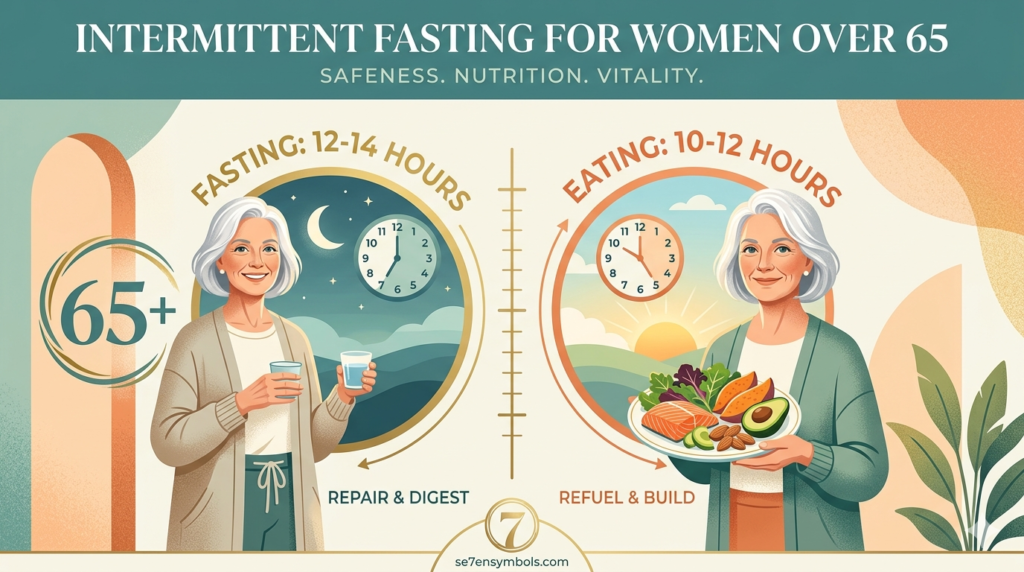
Quick Summary: Intermittent Fasting Over 65
| Primary Goal | Metabolic health, cellular repair (autophagy), and inflammation reduction. |
| Recommended Method | 12:12 or 14:10 “Circadian Fasting” (aligning meals with daylight). |
| Critical Nutrient | High-quality protein (25-30g per meal) to prevent muscle loss (Sarcopenia). |
| Key Benefit | Improved insulin sensitivity and stable energy levels throughout the day. |
| Main Precaution | Consult a doctor if taking medications for blood pressure or blood sugar. |
There is a common misconception that once we reach our mid-60s, our metabolism is “set in stone.” While it’s true that hormonal shifts and natural muscle loss change how our bodies process fuel, your metabolic health remains highly adaptable.
Intermittent fasting (IF) has gained significant traction in the longevity community, and for good reason. For women over 65, it isn’t about restriction—it’s about optimizing the windows in which your body repairs itself.
Why Fasting Changes After 65
In our 60s and beyond, the primary goals of any nutritional strategy are muscle preservation and metabolic flexibility. Unlike younger demographics who may use fasting for rapid weight loss, women over 65 should prioritize IF for its cellular benefits, such as autophagy (the body’s way of cleaning out damaged cells) and improved insulin sensitivity.
However, the “standard” 16:8 approach isn’t always the best starting point for everyone. Here is how to navigate fasting effectively in this stage of life.
The Best Fasting Schedules for Seniors
For women over 65, a “gentle” approach often yields the most sustainable results without risking fatigue or nutrient deficiencies.
The 12:12 Method (Circadian Fasting): This is the most natural entry point. You fast for 12 hours (e.g., 7 PM to 7 AM). This aligns with your natural circadian rhythm and supports better sleep quality.
The 14:10 Approach: This offers a slightly deeper metabolic benefit while still allowing a 10-hour window to consume necessary protein and nutrients.
The “Early Bird” Window: Research suggests that ending your eating window earlier in the evening (e.g., finishing dinner by 6 PM) is more effective for seniors than skipping breakfast, as it improves blood sugar regulation overnight.
The Protein Rule: Don't Fast at the Expense of Muscle
The biggest risk of intermittent fasting for women over 65 is accidental under-eating, specifically regarding protein. Sarcopenia, or age-related muscle loss, is a significant hurdle.
When you do eat, prioritize single-ingredient, whole foods. Ensure each meal contains at least 25–30 grams of high-quality protein to stimulate muscle protein synthesis. If you find you cannot hit your protein goals within a shortened window, it is better to widen your eating window than to skip the protein.
Key Benefits to Watch For
When done correctly, you may notice several shifts in your daily well-being:
Reduced Inflammation: Many women report a decrease in joint “morning stiffness.”
Mental Clarity: By stabilizing blood sugar, you avoid the afternoon “brain fog” often caused by insulin spikes.
Better Digestion: Giving the gut a full 12–14 hours of rest can significantly improve bloating and digestive efficiency.
Safety and Considerations
Before adjusting your eating schedule, consider these three factors:
Hydration: Fasting can have a diuretic effect. Ensure you are drinking plenty of water and perhaps adding electrolytes, especially if you remain active with strength training guides for seniors.
Medication: If you take medications for blood pressure or diabetes, consult your doctor, as fasting can change how these drugs interact with your system.
Bone Health: Ensure your eating window includes adequate Calcium and Vitamin D.
The Bottom Line
Intermittent fasting for women over 65 is a tool for longevity, not a punishment. Start with a simple 12-hour window and listen to your body. The goal is to feel more energized, not depleted.
For more strategies on fueling your body for the long haul, check out our comprehensive guide to nutrition for seniors or explore our 7 Pillars of health to see how recovery and nutrition work together.