| 📋 Method | ⏱️ Eating Window | ✅ Best For | ⚠️ Watch For | 🎯 Protein Target |
|---|---|---|---|---|
| 🟢 12:12 Recommended Start |
12 hours eating e.g. 7am – 7pm |
All women over 60 starting IF. Medication-friendly. Easiest to hit protein targets. Gentle on cortisol and sleep. | Most people already do this. If not, this is your first goal — stop eating 12 hours before breakfast. | 3 meals within window. 25–40g protein each. |
| 🟡 14:10 Step 2 (Week 3+) |
10 hours eating e.g. 8am – 6pm |
Women who tolerate 12:12 well and want more metabolic benefit. Still allows 3 proper meals. | Dinner must finish by 6pm. Monitor sleep and energy. Back off if fatigue or muscle weakness appears. | 3 meals within window. 25–40g protein each. |
| 🟠 16:8 Use Caution |
8 hours eating e.g. 10am – 6pm |
Best studied IF method overall. May suit women whose appetite is naturally lower in the morning and who can hit protein in 2–3 meals. | Hardest to hit 75–120g daily protein. Review medication timing. Not recommended as a starting point for women over 60. | 2–3 meals minimum. 40g protein at each meal. |
| 🔵 5:2 Research Protocol |
5 normal days / 2 restricted days (~500 cal) | Used in the 2024 Johns Hopkins / NIH brain health study. Produced cognitive improvements and greater weight loss than standard healthy diet. | Low-calorie days are very difficult to maintain protein targets. Requires medical guidance. Not appropriate as a solo approach. | Normal days: 25–40g/meal. Restricted days: consult doctor. |
| ❌ NOT Recommended for Women Over 60: 20:4, OMAD (One Meal a Day), Alternate Day Fasting — too restrictive for protein and bone health needs | ||||
Sources: Cell Metabolism RCT (2024, Johns Hopkins/NIH, 40 adults ages 55–70) — IF improved executive function and memory · Nature Medicine (2025) — 8-hour TRE weight loss and metabolic improvements · PMC — 6-week study of women 60+ showing fat loss with muscle preservation · PMC 3-year progressive study — IF group showed lower fasting glucose, higher HDL, lower triglycerides · ScienceDirect 2025 — TRE reduced TNF-α and IL-1β in older adults mean age 77 · AARP / Experimental Gerontology (2025) — 108 adults ages 65–74, most successful with TRE

Intermittent fasting has become one of the most searched diet topics for adults over 60 — and for good reason.
The research behind it is genuinely compelling. Weight loss, better blood sugar control, reduced inflammation, and even cognitive benefits are all documented in studies specifically involving older adults.
But here is what most guides on this topic miss: the way intermittent fasting works in a woman over 60 is meaningfully different from the way it works at 35 or 45. Post-menopausal hormonal changes, muscle preservation needs, medication timing, and bone health all require a modified approach.
This guide covers what the research actually shows, which fasting schedule makes the most sense after 60, the specific risks that apply to this age group, and the one rule that determines whether fasting helps or hurts your long-term health.
What Is Intermittent Fasting — and Why Are Seniors Searching for It?
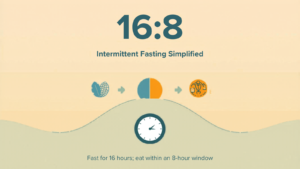
Intermittent fasting is not a diet in the traditional sense. It does not tell you what to eat — it tells you when to eat. You eat during a defined window and fast outside of it, every day or on a structured schedule.
The most commonly searched methods for seniors are:
- 12:12 — eat within a 12-hour window (e.g., 7am to 7pm), fast for 12 hours. The most gentle approach and the most appropriate starting point for most women over 60.
- 16:8 — eat within an 8-hour window, fast for 16 hours. More commonly studied. Requires care with protein intake after 60.
- 5:2 — eat normally five days per week, restrict to approximately 500 calories on two non-consecutive days. Used in several of the cognitive research studies.
The reason it has gained significant traction with adults over 60 is that the benefits go beyond weight loss. A 2025 Nature Medicine study found that 8-hour time-restricted eating produced meaningful weight loss and metabolic health improvements in adults up to age 60 with obesity — and a 2024 Cell Metabolism trial at Johns Hopkins found it improved memory and executive function in adults ages 55 to 70 more strongly than a standard healthy diet.
These are not minor findings for a demographic increasingly concerned about early signs of cognitive decline and metabolic health.
What the Research Shows for Women Specifically After 60
Most intermittent fasting research has been done on mixed-age adults or on younger women. The research specifically on women over 60 is smaller — but what exists is meaningful.
Weight and Body Composition
A 6-week PMC study of women aged 60 and older found that intermittent fasting reduced body fat percentage and BMI significantly compared to control groups. The key finding: fat mass decreased while lean mass was largely preserved — which is the critical distinction for this age group.
A 2025 AARP-referenced study in Experimental Gerontology followed 108 overweight men and women aged 65 to 74 through six weeks of time-restricted eating. Most participants were successful and saw meaningful results.
Blood Sugar and Metabolic Health
Insulin resistance increases after menopause, making blood sugar regulation a growing concern for women over 60. Multiple studies show intermittent fasting consistently improves insulin sensitivity and fasting glucose levels in older adults, independent of weight loss.
A 3-year progressive study published in PMC found that regular intermittent fasting produced significantly lower fasting blood glucose, higher HDL cholesterol, and lower triglycerides compared to non-fasting controls — all markers that deteriorate with age.
Brain Health
The 2024 Cell Metabolism randomized clinical trial — conducted by researchers at Johns Hopkins and the National Institute on Aging — assigned 40 cognitively intact older adults with insulin resistance to either a 5:2 intermittent fasting protocol or a standard healthy diet for 8 weeks.
Both groups showed improvements in memory and executive function. The intermittent fasting group showed stronger improvements on certain cognitive measures, and their brain-age-gap estimate — a measure of how fast the brain is biologically aging — improved on MRI scans.
This is particularly relevant for women over 60, given that women are diagnosed with Alzheimer’s at nearly twice the rate of men. See our post on first signs of memory loss in seniors for the warning signs that matter most.
Inflammation
A 2025 pilot study of overweight older adults — average age 77 — found that time-restricted eating produced measurable reductions in TNF-alpha and IL-1beta, two of the primary inflammatory proteins that drive chronic disease after 60. This connects directly to the anti-inflammatory diet research that consistently shows dietary timing affects inflammatory biomarkers.
The Best Intermittent Fasting Schedule for Women Over 60
Based on what the research and nutrition guidelines say about fasting and age, the recommendation for women over 60 is clear and specific.
Start with 12:12 — a 12-hour eating window that likely mirrors what you already do if you eat breakfast at 7am and finish dinner by 7pm. This is not a dramatic change. It is a structured version of a sensible daily eating pattern.
Why 12:12 rather than the more aggressive 16:8?
- A 12-hour window makes it far easier to hit the 25 to 40 grams of protein per meal that women over 60 require to prevent muscle loss
- It allows for a proper high-protein breakfast — the most important meal for muscle preservation and metabolic signaling
- It does not create the hormonal stress that longer fasting windows can trigger in post-menopausal women, including elevated cortisol and disrupted sleep
- Medication timing is much easier to manage within a 12-hour window
Once 12:12 feels effortless — typically after two to four weeks — women who want to extend can try 14:10 (eating from 8am to 6pm, for example). This is the upper limit most nutrition experts recommend for women over 60 who are not working with a dietitian.
The 16:8 approach is not ruled out — it has the most research support overall — but it requires careful attention to protein intake and is best discussed with a doctor first, particularly if you take medications or have any metabolic conditions.
Our complete guide on whether intermittent fasting is safe for seniors over 60 covers the full safety picture across all fasting protocols.
The One Rule That Determines Whether Fasting Helps or Hurts After 60
Every risk associated with intermittent fasting for women over 60 comes back to a single variable: protein intake.
Here is the problem that applies specifically to this age group.
After 60, the body already experiences anabolic resistance — muscles become less responsive to protein signals, requiring higher doses to trigger the same repair and growth response. Approximately 46 percent of women over 71 do not meet even the basic daily protein recommendation under normal eating patterns.
Compressing eating into a shorter window makes this problem worse unless you actively plan against it.
The target: 25 to 40 grams of protein at every meal during your eating window.
This is non-negotiable. Intermittent fasting that does not hit this target in each meal will accelerate sarcopenia — the age-related muscle loss that is the primary driver of falls, frailty, and loss of independence after 70.
The protein-first rule — eating protein before anything else at every meal — is the single most effective strategy for consistently hitting your protein target within a shortened eating window. Our guide to the best protein sources for seniors gives you the exact gram counts for every practical food option.
5 Specific Risks Women Over 60 Need to Know Before Starting
1. Muscle Loss If Protein Is Insufficient
Already covered above — but worth stating clearly: fasting without adequate protein in each eating window accelerates the muscle loss that begins in your 30s and speeds up dramatically after 60. This is the highest-priority risk to manage.
2. Bone Density in Post-Menopausal Women
Post-menopausal women are at significantly elevated risk of osteoporosis. Calcium and vitamin D — both critical for bone maintenance — need to be reliably consumed during your eating window. Very short windows (16:8 or tighter) make this harder to achieve consistently.
3. Medication Timing
Many medications taken by adults over 60 require food — some must be taken with a meal, others at specific intervals. Before starting any fasting protocol, review your medication schedule with your pharmacist or doctor. For some medications, fasting may require adjusting the dose or timing.
4. Cortisol and Sleep Disruption
Extended fasting can elevate cortisol — the stress hormone. In post-menopausal women, elevated cortisol is particularly problematic: it suppresses what remains of estrogen production, disrupts sleep quality, and can worsen the mood fluctuations many women experience after menopause. This is one of the primary reasons 12:12 is recommended over 16:8 as a starting point.
5. Under-Eating Disguised as Fasting
Older adults already tend toward reduced appetite — a phenomenon researchers call the anorexia of aging. A compressed eating window can easily mask genuine under-eating if you are not tracking protein and overall calories. The weight loss benefit of fasting comes from eating less overall — but for women over 60, eating too little is as dangerous as eating too much.
If you are concerned about unexplained weight changes, see our post on why seniors gain weight even while eating less — the hormonal drivers may surprise you.
How to Start Intermittent Fasting After 60: A Practical Week-by-Week Approach
Week 1 and 2 — Establish Your Eating Window
Choose a 12-hour window that fits your life. 8am to 8pm is the most common. Stop eating after 8pm and do not eat before 8am. That is it for the first two weeks.
Focus entirely on hitting 25 to 40 grams of protein at breakfast, lunch, and dinner within that window. Do not restrict calories. Do not skip meals.
Week 3 and 4 — Assess and Tighten Slightly (Optional)
If the 12-hour window feels effortless and your energy is stable, you can try shifting to 13 or 14 hours of fasting. Move your breakfast 30 to 60 minutes later, or finish dinner 30 to 60 minutes earlier.
Watch for warning signs: fatigue, difficulty concentrating, irritability, poor sleep, or losing strength in your exercises. Any of these signals mean the window is too tight — go back to 12:12.
Week 5 Onward — Add Movement
Intermittent fasting combined with exercise produces significantly better outcomes for muscle preservation and metabolic health than fasting alone.
Light Zone 2 walking — 30 minutes at a conversational pace most days — is the simplest and most research-supported complement to IF for women over 60. Add resistance training twice a week to protect muscle and support bone density.
Does Intermittent Fasting Actually Cause Weight Loss After 60?
This is worth being direct about because most IF content glosses over it.
A 2022 University of Aberdeen study found that it is the reduction in total calories that drives weight loss — not the change in eating timing itself. People who ate fewer calories lost approximately the same amount of weight whether their meals were compressed into a shorter window or spread across the whole day.
What intermittent fasting does well is make eating less calories easier to sustain, because a shorter window naturally reduces opportunities for mindless snacking, late-night eating, and calorie-dense meals that tend to accumulate after dinner.
For women over 60 who want to address belly fat specifically, the combination of a clean 12:12 or 14:10 eating window with the 5 daily longevity foods and adequate protein produces the most consistent and sustainable results.
Frequently Asked Questions
Is intermittent fasting safe for a 65-year-old woman?
For most healthy women over 65, a 12:12 or 14:10 fasting window is considered safe and potentially beneficial. The key conditions: adequate protein at every meal, no significant calorie restriction, medication timing reviewed with a doctor, and monitoring for fatigue or muscle weakness. Women with diabetes, osteoporosis, a history of eating disorders, or those taking medications that require food should consult their physician before starting.
What is the best fasting window for women over 60?
12:12 — a 12-hour eating window — is the evidence-backed starting point for women over 60. It is gentle enough to manage protein and bone health needs, does not stress cortisol significantly, and still provides the metabolic and cognitive benefits documented in research. Women who tolerate 12:12 well after several weeks can progress to 14:10. The 16:8 method is more aggressive and requires additional caution around protein intake and medication timing.
Will intermittent fasting cause muscle loss in women over 60?
It can — but only if protein intake is insufficient. Research shows that intermittent fasting preserves lean muscle mass when combined with adequate protein (25 to 40 grams per meal) and resistance exercise. The risk is not the fasting itself — it is the common pattern of eating less food overall within a shorter window without ensuring protein targets are met at every sitting.
Can intermittent fasting help with menopause belly fat?
Yes — through calorie reduction and improved insulin sensitivity, both of which directly reduce visceral fat accumulation. Post-menopausal women experience a shift in fat distribution toward the abdomen driven by declining estrogen and rising insulin resistance. Intermittent fasting addresses the insulin resistance component directly. Combined with adequate protein and daily movement, it is one of the more effective approaches to abdominal fat after menopause.
Does intermittent fasting improve memory and brain health after 60?
The 2024 Cell Metabolism RCT — 40 older adults with insulin resistance, 8 weeks, conducted by Johns Hopkins and the National Institute on Aging — found that intermittent fasting improved memory and executive function more strongly than a standard healthy diet, and reduced the brain-age-gap estimate on MRI. Insulin resistance is a known risk factor for Alzheimer’s disease, and reducing it through fasting appears to produce downstream cognitive benefits. This is an active area of research and the findings are promising but not yet definitive.
What should women over 60 eat during their eating window?
Prioritize protein at every meal first — eggs, Greek yogurt, cottage cheese, lean ground turkey, canned chicken, or protein powder in oatmeal. Add leafy greens, healthy fats (olive oil, avocado, nuts), and fiber-rich foods. Minimize refined carbohydrates and processed foods during the eating window, as these drive the insulin spikes that undermine the
metabolic benefits of fasting. The protein-first approach naturally structures each meal around the most important nutrient first.
How long before intermittent fasting shows results in women over 60?
Metabolic changes — improved insulin sensitivity, reduced fasting blood glucose — typically begin appearing within 2 to 4 weeks of consistent 12:12 or 14:10 fasting. Weight and body composition changes take longer — most research showing meaningful fat loss used protocols of 6 to 12 weeks. Cognitive improvements documented in the Johns Hopkins study appeared after 8 weeks of consistent fasting. Consistency over weeks and months produces the results — not a single week of strict fasting.
Conclusion
Intermittent fasting is one of the most evidence-supported dietary approaches available to women over 60 — when done correctly.
The research shows real benefits: improved insulin sensitivity, reduced inflammation, body fat loss, and cognitive improvements documented at the Johns Hopkins / NIH level.
The risks are real too — but they are manageable. Every significant risk comes back to the same variable: are you hitting your protein target at every meal within your eating window.
Start with 12:12. Hit 25 to 40 grams of protein at every meal. Add a daily walk and two resistance sessions per week. Give it eight weeks before evaluating results.
Stack these small daily habits consistently — and the compounding effect over months is what the longest-lived, healthiest seniors share as their common approach.