Disclosure: This post contains affiliate links. If you purchase through our links, we may earn a small commission at no extra cost to you. We only recommend products we genuinely believe are safe and beneficial for older adults. Thank you for supporting Se7en Symbols.
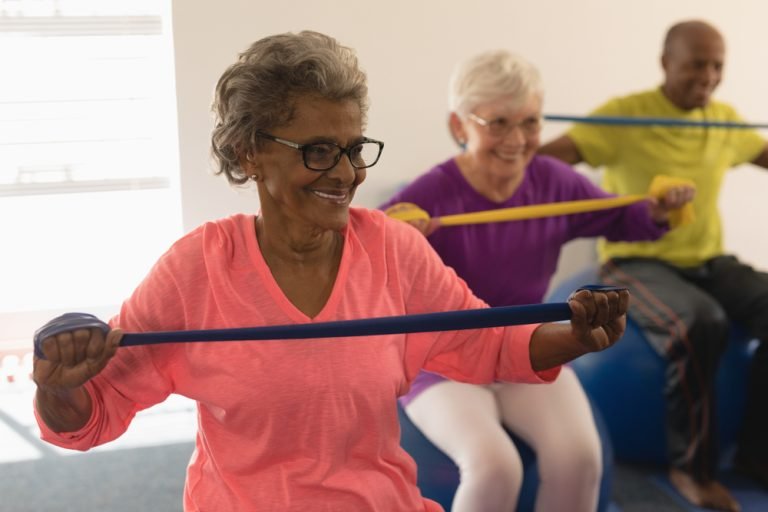
The bottom line: Resistance bands are one of the safest, most affordable, and most effective tools for seniors to build strength, improve balance, and stay mobile — without the joint stress of heavy weights. But not all bands are created equal. We’ve broken down the best options so you can start moving with confidence.
| Product | Type | Best For | Resistance | Rating | Price | Link |
|---|---|---|---|---|---|---|
| Theraband CLX Loop Editor’s Pick | Loop band | Physical therapy & rehab | Light – Medium | ★★★★★ | ~$18 | Check Price |
| Fit Simplify Set (5 bands) | Loop set | Best overall value | X-Light – X-Heavy | ★★★★★ | ~$11 | Check Price |
| SPRI Tube Band w/ Handles | Tube + handles | Upper body & seated | Light – Heavy | ★★★★☆ | ~$14 | Check Price |
| Perform Better Mini Bands | Mini loop | Hip, glute & knee rehab | Light – Medium | ★★★★☆ | ~$16 | Check Price |
| Amazon Basics Flat Band Set | Flat therapy band | Budget pick & beginners | Light – Medium | ★★★★☆ | ~$9 | Check Price |
Why Resistance Bands Are Perfect for Seniors
Unlike dumbbells or machines, resistance bands provide progressive, joint-friendly tension that follows the natural arc of your movement. That means less stress on arthritic joints and a significantly lower risk of injury — while still delivering real strength gains.
A 2019 review published in the Journal of Human Kinetics found that resistance band training in older adults produced comparable muscle strength improvements to free weight training, with fewer adverse effects.
💡 Pro Tip
Always start with the lightest resistance level, even if it feels easy. Bands feel deceptively simple —
proper form matters far more than resistance level, especially in the first few weeks.
The 5 Best Resistance Bands for Seniors
#1 Best Overall — Theraband CLX Loop Band
1. Theraband CLX Loop Band — Best Overall (Editor’s Pick)
Approximate price: ~$18 | Resistance: Light–Medium | Type: Loop band
The Theraband CLX is the gold standard in resistance bands — it’s used in hospitals, physical therapy clinics, and rehab centers worldwide, which tells you everything you need to know about its quality and safety profile.
What makes it ideal for seniors specifically is the consecutive loop design. Each loop serves as a handhold, which means you don’t have to grip the band tightly to use it. For anyone managing arthritis or reduced hand strength, that’s a significant advantage. It’s also available in eight resistance levels from extra-thin to special heavy, so there’s a level for every starting point.
Pros:
- Clinically proven — used in hospitals and PT clinics worldwide
- Consecutive loops allow hands-free use, ideal for limited grip strength
- 8 resistance levels from extra-thin to special heavy
- Latex-free version available for sensitive skin
- Works equally well seated or standing
Cons:
- More expensive than generic band sets
- Less portable than mini loop sets
Affiliate: Check Price
2. Fit Simplify Resistance Loop Band Set — Best Value
Approximate price: ~$11 | Resistance: X-Light to X-Heavy | Type: Loop set of 5
The Fit Simplify set is the most popular resistance band set on Amazon for good reason — it delivers five progressive resistance levels in one affordable package, which means you have a full progression path from day one through months of training.
The natural latex construction is comfortable and durable, and the included carrying bag makes it easy to take to a friend’s house, a hotel room, or even outside. With over 50,000 five-star reviews, it’s as battle-tested as they come. Great for lower body work including our seated leg exercises in the
MicroFit Chair Strength routine.
Pros:
- 5-band set covers beginner through advanced in one purchase
- Natural latex — comfortable, durable, snaps back cleanly
- Includes carrying bag and exercise guide
- Excellent for leg, glute, and hip exercises
- Massively reviewed — trusted by thousands of seniors
Cons:
- Loop format is less ideal for some upper-body movements
- Can roll slightly above the knee during active exercises
Affiliate Link: Check Price
3. SPRI Tube Resistance Band with Handles — Best for Upper Body & Seated Use
Approximate price: ~$14 | Resistance: Light–Heavy | Type: Tube band with foam handles
If you have arthritis or find gripping flat bands difficult, the SPRI tube band with padded foam handles is the answer. The soft grip handles completely remove the need to squeeze the band, making bicep curls, shoulder presses, and seated rows significantly more comfortable.
The included door anchor is a bonus — it lets you set up cable-style pulling exercises from a seated position, which pairs perfectly with the chair-based routines in our MicroFit app. We use this style of band in our seated upper body programming.
Pros:
- Foam handles eliminate hand strain — excellent for arthritis
- Door anchor included for seated rows and chest pulls
- Works seamlessly with chair-based exercise routines
- Multiple resistance levels sold individually — buy what you need
Cons:
- Tube bands can snap if over-stretched or old — always inspect before use
- Slightly bulkier to store than flat loop bands
Affiliate Link:
Check Price
4. Perform Better Mini Resistance Bands — Best for Hip & Knee Rehab
Approximate price: ~$16 | Resistance: Light–Medium | Type: Mini loop set of 3
The mini loop format is what physical therapists reach for when working on hip, glute, and knee rehabilitation — and for good reason. Worn just above the knees, these bands add targeted resistance to clamshells, side-lying hip abductions, glute bridges, and lateral walks — all movements that directly reduce fall risk in older adults.
These exercises are also featured in our Balance & Stability workout. Adding a mini band takes those movements from bodyweight to genuinely therapeutic.
Pros:
- Mini loop size sits perfectly above the knee for hip and glute work
- Used by physical therapists for hip, glute, and knee rehab
- Extremely portable — fits in any bag or pocket
- 3-level set gives you a built-in progression path
Cons:
- Limited application for upper body exercises
- Sold in set of 3 — may require some trial to find the right resistance
Affiliate Link: Check Price
5. Amazon Basics Flat Resistance Band Set — Best Budget Pick
Approximate price: ~$9 | Resistance: Light–Medium | Type: Flat therapy band set
If you want to get started for under ten dollars, the Amazon Basics flat band set is a solid, no-frills entry point. The flat band design is the original physical therapy format — it’s what your doctor’s office likely has on hand — and Amazon’s version holds up well for light-to-moderate daily use.
Light and medium resistance are all most beginners need for the first three to six months, so this set covers that window without overcomplicating things. It won’t outlast a Theraband, but it’s a legitimate starting point.
Pros:
- Lowest price point on this list — ideal if you’re unsure where to start
- Flat band format is familiar and used in clinical settings
- Light and medium levels are appropriate for most seniors starting out
- Available on Prime with fast shipping
Cons:
- Less durable than premium brands over extended use
- No handles or loops — less versatile for some upper body exercises
Affiliate Link: Check Price
How to Choose the Right Resistance Band — A Senior Buyer's Guide
Start With Lighter Resistance Than You Think You Need
This is the most common mistake seniors make. Even if a light band feels too easy on the first rep, form and consistency matter far more than resistance level in the early weeks. Choosing too heavy a band leads to compensation, poor mechanics, and potential injury. As a rule: if you can complete 15 clean reps without struggling, then move up one level.
Latex vs. Non-Latex: What’s the Difference?
Most bands on this list are made from natural latex, which is the most elastic and durable material available. However, if you have a known latex allergy or skin sensitivity, look specifically for bands labeled TPE (thermoplastic elastomer). These perform nearly identically and are widely available — both Fit Simplify and Theraband offer non-latex options.
Handles vs. No Handles
For seniors with arthritis, carpal tunnel, or reduced grip strength, foam-handled tube bands are strongly recommended for any upper body work. The handles transfer force through the palm rather than requiring you to grip the band, which is far more comfortable and safe over longer sets.
Matching Band Type to Your Goals
Loop bands: Best for lower body — squats, hip abductions, glute bridges, leg raises.
Tube bands with handles: Best for upper body — curls, presses, rows, shoulder work.
Flat therapy bands (Theraband-style): Most versatile overall — can be used for upper and lower body, seated or standing, and are what most physical therapists prescribe.
Mini loops: Best for targeted hip, glute, and knee rehab work.
Safety Tips Before You Start
Resistance bands are safe — but like any exercise tool, they require some basic precautions, especially for older adults.
- Inspect your band before every single session. Look for small nicks, tears, fading, or discoloration. A compromised band can snap under tension.
- Never stretch a band more than 2.5 times its resting length. Over-stretching dramatically shortens band lifespan and increases snap risk.
- Store bands away from direct sunlight and heat. UV exposure degrades latex quickly.
- Replace bands every 12–18 months with regular use, or immediately if you see any damage.
- Always anchor the band securely before pulling. A slipped anchor is the most common cause of resistance band injuries.
- Stop immediately if you feel sharp pain, chest discomfort, dizziness, or shortness of breath. These are not normal exercise sensations.
For joint-safe exercise programming designed around resistance bands, see our full MicroFit Chair Strength routine — it was built specifically to protect senior joints while building real strength.
Key Takeaways
- Best Overall: Theraband CLX Loop — clinically proven, versatile, and safe for all fitness levels
- Best Value: Fit Simplify 5-Band Set — the most complete beginner-to-intermediate package
- Best for Arthritis/Grip Issues: SPRI Tube Band with Handles — foam grips reduce hand strain significantly
- Best for Hip & Knee Rehab: Perform Better Mini Bands — used by physical therapists for a reason
- Best Budget Entry: Amazon Basics Flat Bands — solid starting point under $10
- Always start at the lightest resistance and prioritize form over intensity
- Inspect bands before every session and replace at any sign of wear
Frequently Asked Questions
Are resistance bands safe for seniors with osteoporosis?
Yes — resistance bands are generally considered one of the safest resistance training tools for older adults with osteoporosis. They place gentle, progressive load on muscles and bones without impact stress. That said, always consult your physician or physical therapist before beginning any new exercise program.
What resistance level should a senior start with?
Most seniors should begin with extra-light or light resistance. The right level allows you to complete 12–15 reps with good form and mild effort — not strain. If you can’t maintain proper form by rep 10, the resistance is too heavy.
Can resistance bands replace weights for seniors?
For most functional fitness goals — strength, balance, mobility, and daily task performance — yes. Research consistently shows resistance bands produce comparable strength gains to free weights in older adults, with a significantly lower injury risk. Many seniors use bands exclusively with excellent long-term results.
How often should seniors use resistance bands?
Two to three sessions per week is the standard recommendation for strength training in older adults. Our MicroFit for Seniors app includes six different micro-workout sessions across mobility, strength, balance, cardio, and flexibility — making it easy to vary your routine and stay consistent.
How long do resistance bands last?
With proper care — stored away from sunlight and heat, rinsed if sweated on — quality latex bands typically last one to two years with regular use. Budget bands may degrade faster. Always inspect before each session and replace immediately if you notice any degradation.