Here’s a question worth asking: what is exercise actually for? For most seniors, the honest answer isn’t aesthetics or athletic performance. It’s this — being able to get up off the floor if you fall. Carry groceries without pain. Climb stairs without holding the rail. Get out of a chair without using your arms. Live at home, independently, for as long as possible.
That’s what functional fitness is designed to deliver. And it’s the training style that longevity researchers, physiotherapists, and exercise scientists consistently point to as the most important for adults over 60 — above cardio, above aesthetics, above everything else.
It doesn’t require a gym. It doesn’t require equipment. And it doesn’t require you to be fit to start. It requires you to train the movements of real life — deliberately, progressively, and consistently.
💡 Adults 65 and older are now the fastest-growing gym demographic worldwide. But the majority are still following programs designed for younger bodies chasing aesthetic goals. Functional fitness is different — it’s built around the movements that determine whether you live independently or don’t.
What Is Functional Fitness — And Why Does It Matter After 60?
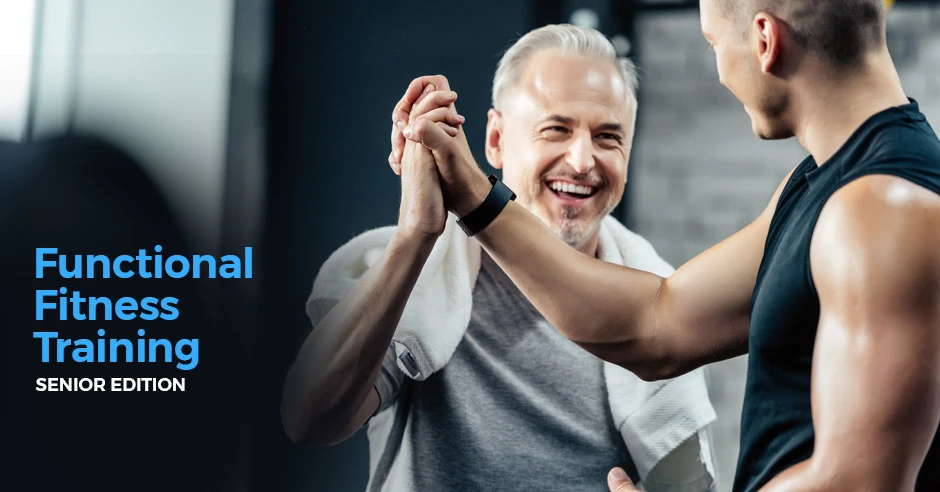
Functional fitness trains movement patterns rather than isolated muscles. Traditional gym training often focuses on one muscle at a time — a bicep curl, a leg extension, a chest press. Functional training focuses on the patterns those muscles work together to produce: pushing, pulling, squatting, hinging, carrying, and rotating.
These six patterns map directly onto daily life. Squatting is sitting and standing. Hinging is picking something up off the floor. Pushing is getting out of bed or opening a heavy door. Carrying is groceries, grandchildren, laundry. When these patterns become weak or restricted, daily independence erodes — not dramatically, but gradually, until one day the things you used to do without thinking require help.
The good news: these patterns respond to training at any age. A 2019 systematic review in Age and Ageing found that functional training significantly improved physical performance, balance, and quality of life in older adults — with effects measurable after as little as eight weeks. The body doesn’t stop adapting after 60. It just needs the right stimulus.
🔬 2021 ICFSR International Consensus Report: Functional resistance training — exercises that replicate real-life movement patterns — is the recommended foundation for exercise programming in older adults, above all other training modalities.
The 6 Functional Movement Patterns Every Senior Should Train
1. 🪑 Squat — Sitting and Standing
The squat pattern is the single most important movement for senior independence. Every time you sit down or stand up, you’re performing a squat. As leg strength declines, this movement becomes harder — eventually requiring arm assistance, then furniture assistance, then help from another person. The sit-to-stand exercise trains this pattern safely with no equipment, using a chair as a depth guide. Three sets of 10 with a 3-second lowering phase is all it takes to maintain this fundamental ability.
💡 The sit-to-stand test — how many times you can rise from a chair in 30 seconds — is one of the most reliable clinical predictors of fall risk, hospitalization, and mortality in adults over 60. Training this pattern directly changes that outcome.
2. 🏋️ Hinge — Picking Things Up Safely
The hip hinge — bending forward from the hips with a neutral spine — is how humans are designed to pick things up. Most seniors either avoid bending altogether or do it by rounding the lower back, which loads the lumbar spine in its most vulnerable position. Training the hinge pattern with a resistance band or light dumbbell teaches the body to load the hips and glutes instead — protecting the back and building the posterior chain strength that directly reduces fall risk.
3. 💪 Push — Getting Up and Pushing Away
Pushing movements — chest press, overhead press, wall push-up — train the muscles needed to push yourself up from a chair, a bed, or the floor. They also build the shoulder and chest strength that supports posture and upper body stability. For seniors avoiding floor work, seated band presses and wall push-ups provide the same stimulus with zero balance demands.
4. 🔙 Pull — The Most Neglected Pattern
Pulling movements — rows, lat pulldowns, band pull-aparts — train the upper back muscles that counteract the forward-rounded posture almost universal in older adults. Poor pulling strength contributes directly to kyphosis (the hunched upper back), neck pain, shoulder impingement, and the stooped gait that signals declining physical function. A single seated row exercise done consistently reverses years of postural decline.
5. 🚶 Carry — The Forgotten Functional Exercise
Carrying — walking with a weight in one or both hands — is one of the most functional and underused exercises available to seniors. It trains grip strength (a powerful longevity marker), core stability, shoulder stability, and cardiovascular fitness simultaneously. Farmer’s carries — simply walking across a room holding a grocery bag or light dumbbell in each hand — require no equipment and directly replicate the demands of daily life.
6. ⚖️ Balance and Stability — The Pattern That Prevents Falls
Every step you take is a single-leg balance exercise. Training balance deliberately — single-leg stands, heel-to-toe walking, step-ups — builds the neuromuscular reflexes that catch you when you stumble. This is the pattern with the most direct impact on fall prevention, and it requires nothing more than standing near a counter for 90 seconds a day.
🔬 British Journal of Sports Medicine: Adults who could not balance on one leg for 10 seconds had an 84% higher risk of all-cause mortality over a 7-year follow-up period, independent of age, sex, BMI, and other health factors
How to Start — Without a Gym or a Trainer
The most effective functional fitness program for seniors doesn’t require a gym membership, specialist equipment, or a personal trainer. It requires a chair, a resistance band, and three sessions per week. Every one of the six movement patterns above can be trained at home — and our complete guide to seated resistance band exercises covers all of them with step-by-step modifications for every mobility level.
If getting down to the floor is a barrier, our chair-based workout program delivers a full functional training session from a seated position — building the leg, core, and upper body strength that matters most without any floor work.
For the cardio component, incline treadmill walking is the ideal functional cardio choice for seniors — it trains the hip flexors, glutes, and posterior chain in the same patterns used for walking, stair climbing, and hill navigation, while keeping joint impact low.
💪 Start this week: Pick two patterns from the six above and do 3 sets of 10 reps each, three times this week. Squat and pull are the highest priority for most seniors. That’s your functional fitness program — built in 20 minutes.
Functional Fitness Without the Right Nutrition Is Half the Equation
Training the right movement patterns is essential. But the muscle those patterns depend on is built — and protected — through adequate protein intake. After 60, the body needs more protein per kilogram of bodyweight than at any earlier point in adult life, due to a process called anabolic resistance that reduces how efficiently aging muscle uses dietary protein.
Combine functional training with the right protein sources and an anti-inflammatory diet — which reduces the systemic inflammation that directly impairs muscle repair and joint health — and the results compound significantly faster than training alone.
And if declining testosterone levels are affecting your energy, recovery, or motivation to train, that hormonal foundation is worth addressing alongside the exercise — the two work together, not independently.
💡 Functional fitness and proper nutrition are the two most powerful tools available to seniors for maintaining independence. The 10 small daily habits that compound into major health gains after 60 show exactly how to stack both into a sustainable daily routine.
Frequently Asked Questions
What's the difference between functional fitness and regular exercise?
Traditional exercise often isolates muscles — a leg extension machine trains the quad in one plane of movement. Functional fitness trains movement patterns that use multiple muscles and joints working together, as they do in real life. The result is strength and coordination that transfers directly to daily activities rather than gym performance alone.
Is functional fitness safe for seniors with arthritis or joint pain?
Yes — with appropriate modifications. Functional training is actually one of the most joint-friendly approaches available because it trains muscles through natural ranges of motion rather than forcing joints into extreme positions. Our guide on reducing joint pain without medication covers how movement — done correctly — is medicine for arthritic joints, not a threat to them.
How is this different from just walking every day?
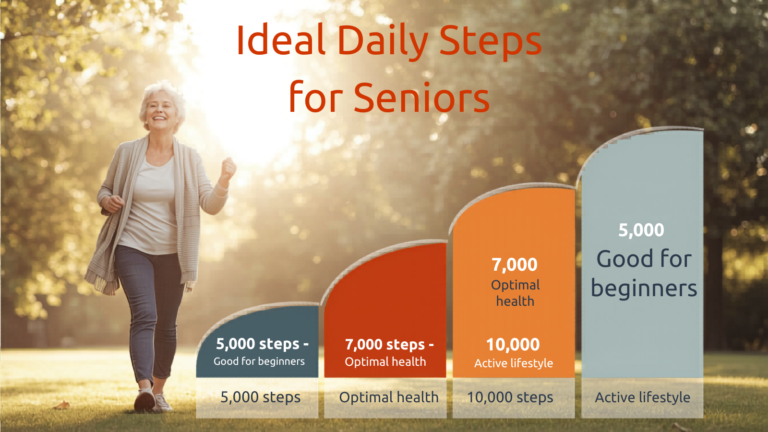
Walking is excellent for cardiovascular health, blood sugar regulation, and mood — but it doesn’t train the pushing, pulling, hinging, and carrying patterns that prevent muscle loss and maintain upper body function. Functional fitness complements walking by covering what walking cannot. For a full breakdown of what walking does and doesn’t deliver, see our honest analysis of whether walking is enough exercise after 60.
How many times a week should seniors do functional training?
Two to three sessions per week is the research-backed minimum for meaningful strength and function gains in older adults. Each session can be as short as 20–30 minutes when focused on the six movement patterns. Pairing functional training with daily habit stacking — short consistent sessions rather than occasional long ones — produces the best long-term results.
Do I need equipment?
No. Your bodyweight is sufficient to train all six patterns at beginner level. As you progress, a resistance band adds load without the balance demands or joint stress of free weights — and covers every pattern in the program. A chair is the only other tool you need.
Can functional fitness help with balance and fall prevention?
It’s one of its primary benefits. The balance and stability pattern — single-leg standing, step-ups, heel-to-toe walking — is built directly into functional training. Combined with the leg and hip strength developed through squatting and hinging, it addresses the two root causes of falls in older adults simultaneously: weak legs and poor neuromuscular reflexes.
The Short Version
Functional fitness trains the movements of daily life — not isolated muscles. For seniors, it is the most direct path to maintaining the physical independence that makes everything else possible. Six movement patterns cover everything:
- Squat — sit to stand. Trains the legs and hips for getting up independently.
- Hinge — pick things up safely. Protects the lower back by loading the posterior chain.
- Push — getting up, opening doors. Builds the shoulder and chest strength that supports posture.
- Pull — rows and pull-aparts. The most neglected pattern and the antidote to poor posture.
- Carry — farmer’s walks. Trains grip, core, and cardiovascular fitness in one movement.
- Balance — single-leg standing. The 90-second daily practice that directly reduces fall risk.
Two to three sessions per week, 20–30 minutes each, using a chair and a resistance band. That is the full program.
Related reading:
- Seated Resistance Band Exercises for Seniors — Train All 6 Patterns from a Chair
- Chair Workouts for Seniors — Full Functional Training with Zero Floor Work
- Top 5 Exercises Seniors Should STOP Doing — And What to Do Instead
- Top 5 Ways Seniors Can Reduce Joint Pain Without Medication
- The Best Protein Sources for Seniors — Fuel the Muscle Functional Training Builds
- Sarcopenia — Why Muscle Loss After 60 Makes Functional Training Non-Negotiable
- The 12-3-30 Treadmill Workout — The Best Functional Cardio for Seniors
- 10 Small Daily Habits That Compound Into Major Health Gains After 60
- Testosterone and Aging — The Hormonal Foundation That Supports Functional Training
────────────────────────────────────────────────────────────────────────
⚠️ Medical Disclaimer: This article is for informational and educational purposes only and does not constitute medical advice. Always consult your physician before beginning a new exercise program, particularly if you have a cardiovascular condition, joint replacement, osteoporosis, diabetes, or other chronic health condition. Do not stop or change prescribed medications without medical supervision.