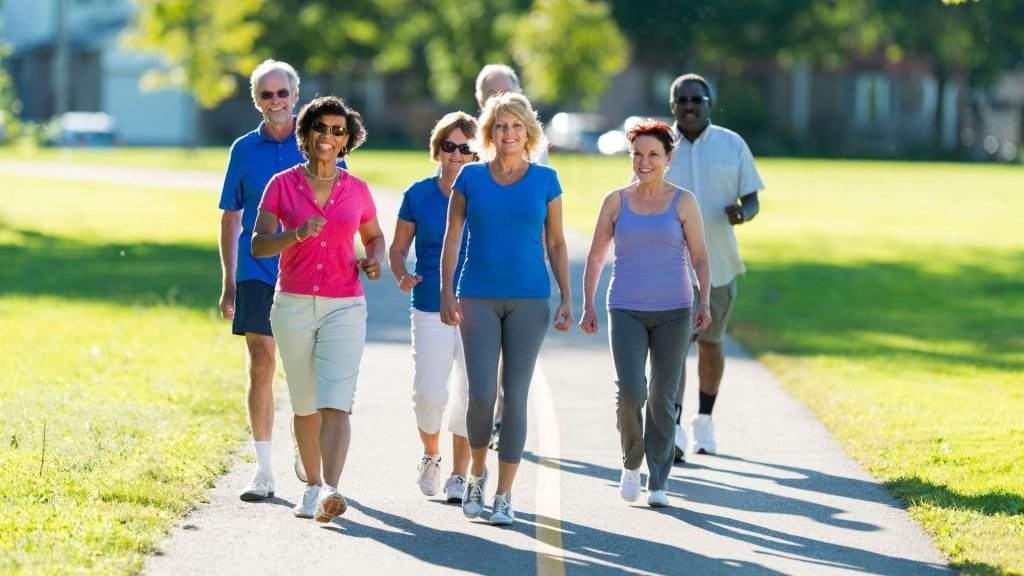
Walking is the most popular form of exercise among adults over 60. It’s free, low-impact, requires no equipment, and almost anyone can do it. Doctors recommend it. Fitness trackers are built around it. And for good reason — the research on walking and longevity is some of the most consistent in all of preventive medicine.
But here’s the question that deserves a straight answer: is walking — by itself — actually enough exercise after 60?
The honest answer is: it depends on what you’re trying to protect. For cardiovascular health, blood sugar regulation, and mood, walking is genuinely excellent. But for muscle preservation, bone density, and fall prevention — the three things that most directly determine whether you live independently in your 70s and 80s — walking alone almost certainly isn’t enough.
This isn’t an argument against walking. It’s an argument for understanding exactly what walking does — and doesn’t — do, so you can close the gap with two targeted additions that don’t require a gym, a trainer, or a dramatic lifestyle change.
💡 Regular exercise is one of the most powerful longevity interventions available to adults over 60 — dramatically reducing the risk of cardiovascular disease, cognitive decline, sarcopenia, and fall-related injury. The question isn’t whether to exercise. It’s which types cover all the bases.
What Walking Does Exceptionally Well
Cardiovascular Health and Blood Pressure
A landmark study in the New England Journal of Medicine found that adults walking at least 150 minutes per week had significantly lower cardiovascular disease risk — regardless of whether they did any other formal exercise. For seniors managing high blood pressure, heart disease, or elevated cholesterol, brisk daily walking is one of the most effective and accessible interventions available.
Blood Sugar and Metabolic Health
A 15-minute walk after eating is one of the most powerful tools available for blood sugar control in older adults. A 2022 meta-analysis in Sports Medicine found post-meal walking reduced blood glucose spikes by 17–30% compared to remaining seated — more effective than a single longer walk taken earlier in the day. For the roughly 1 in 4 seniors managing type 2 diabetes or prediabetes, this single habit produces measurable results within weeks.
Brain Health and Dementia Prevention
A 2022 study in JAMA Neurology found that adults walking approximately 9,800 steps per day had a 51% lower risk of developing dementia over the follow-up period. Walking also consistently outperforms medication for reducing depression and anxiety in older adults — particularly when done outdoors, where natural light supports circadian rhythm and sleep quality.
Joint Health
Counterintuitively, walking is medicine for arthritic joints, not a threat to them. Movement stimulates synovial fluid production — the joint’s natural lubricant — and reduces the chronic inflammation that drives joint deterioration. If joint pain is limiting your movement, the research-backed interventions go well beyond rest and medication.
💡 Walking is genuinely excellent for cardiovascular health, blood sugar, brain function, and joint health. The question is whether it covers everything your body needs after 60. For most seniors, without these specific additions, it doesn’t.
Where Walking Falls Short After 60
Three specific biological processes accelerate after 60 that walking alone cannot adequately address. Understanding them is what changes how you train — and what you need to add.
1. 🔻 Muscle Loss (Sarcopenia) — The Silent Threat to Independence
Starting around age 30, adults lose roughly 3–8% of their muscle mass per decade. After 60, that rate accelerates sharply. The clinical term is sarcopenia — and it’s directly linked to falls, fractures, loss of daily independence, metabolic decline, and premature mortality. It is also largely preventable with the right type of exercise — which walking is not.
Walking does not meaningfully prevent or reverse sarcopenia. The reason is mechanical: muscle is preserved and built through progressive resistance — loading a muscle close to its capacity and forcing adaptation. Walking moves your bodyweight across flat ground. That stimulus is far below the threshold needed to trigger muscle protein synthesis in aging muscle tissue.
🔬 A 2022 review in Ageing Research Reviews confirmed that aerobic exercise alone — including walking — produces minimal muscle mass or strength gains in older adults. Resistance training is required to address sarcopenia.
2. 🦴 Bone Density Loss — Walking Isn't Enough
Osteoporosis affects an estimated 10 million Americans, the majority of them women over 60. Hip fractures — one of the most common consequences — carry one-year mortality rates of 20–30% in seniors. Walking is weight-bearing, so it provides some bone stimulus — more than swimming or cycling. But it is not sufficient to meaningfully maintain bone density in most older adults. Bone responds to impact and progressive resistance — forces substantially greater than a flat walk delivers.
3. ⚖️ Balance Deterioration — The Fall Risk Walking Doesn't Fix
Falls are the leading cause of injury-related death in adults over 65 in the United States. More than 1 in 4 seniors falls each year. Walking improves general coordination, but it does not specifically train the reactive neuromuscular strength and proprioception needed to catch yourself when you stumble. Balance is a distinct physical skill — and like all skills, it requires deliberate, targeted practice.
🔬 British Journal of Sports Medicine: Adults who could not balance on one leg for 10 seconds had an 84% higher risk of death from all causes over a 7-year follow-up, independent of age, sex, and other health factors.
⚠️ If you walk regularly but have never incorporated balance training, this is the single highest-leverage addition you can make today. It takes 90 seconds and requires no equipment.
What the Research Says Seniors Actually Need
The American College of Sports Medicine publishes specific exercise guidelines for older adults that go significantly beyond walking. Most seniors who walk regularly cover the aerobic recommendation. The majority miss the other three:
- 150–300 minutes of moderate-intensity aerobic activity per week (walking qualifies)
- Muscle-strengthening activities targeting all major muscle groups at least 2 days per week
- Balance training at least 3 days per week for seniors at fall risk
- Flexibility work on most days
The Two Additions That Close the Gap
1. 💪 Resistance Training — The Most Important Addition
If the research on exercise for seniors over 60 says one thing clearly, it’s this: resistance training is non-negotiable. Not optional. Not for athletes only. For every older adult who wants to maintain muscle, protect bones, reduce fall risk, and preserve physical independence.
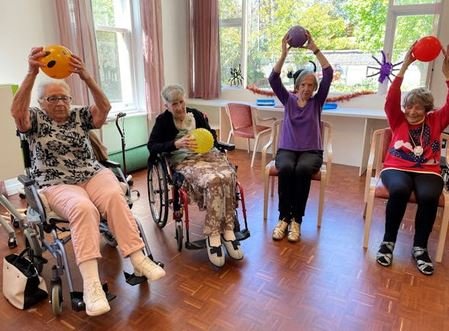
Two sessions per week, 20–30 minutes each, targeting all major muscle groups. That is the minimum effective dose for meaningful muscle preservation after 60. You don’t need a gym — resistance bands allow full-body strength training from a chair, with complete control over load and range of motion. If you prefer pure bodyweight work, chair-based exercises cover the same muscle groups with zero equipment.
If joint pain has been keeping you from exercising, our guide on safer exercise alternatives shows exactly which movements to swap out — and what to replace them with.
🔬 A 2022 review in Ageing Research Reviews confirmed that resistance training 2–3 times per week produces significant improvements in muscle mass, strength, physical function, and fall risk in older adults. Even two sessions per week is transformative compared to none.
💪 Start here: Add one 20-minute resistance band session this week alongside your regular walk. That single session addresses what walking cannot.
2. 🚶 Upgrade Your Walk — The 12-3-30 Method
If you’re going to walk anyway, extract substantially more from it with one change: add incline. The 12-3-30 treadmill method — walking at a 12% incline at 3 mph for 30 minutes — dramatically increases muscle activation in the glutes, hamstrings, and quads compared to flat walking, while burning more fat and generating far greater cardiovascular demand. It’s still walking — but it’s doing significantly more for your body.
Research from the American Council on Exercise confirmed the 12-3-30 burns approximately 220 calories per session, qualifies as moderate-intensity cardio, and produces higher fat utilization than running at equivalent calorie output — with dramatically lower joint impact. For seniors wanting cardiovascular intensity without the pounding of running, incline walking is the closest thing to a perfect solution.
🚶 Start here: Increase your treadmill incline to 6% this week. Build to 8%, then 10%, then 12% over the following weeks. The incline does the work — the speed stays manageable.
3. 🧘 Balance Training — 90 Seconds a Day
Single-leg standing is the most accessible fall prevention exercise available. Stand near a counter. Lift one foot one inch off the floor. Hold 10–30 seconds. Switch sides. Two sets per side. As your balance improves, progress to standing on a folded towel, then eyes closed, then heel-to-toe walking. Pairing this with your resistance sessions addresses the two primary physical causes of falls simultaneously: muscle weakness and poor proprioception.
💡 The British Journal of Sports Medicine linked the inability to balance on one leg for 10 seconds with an 84% higher risk of all-cause mortality over 7 years. This is not a vanity exercise — it is one of the most direct physical predictors of longevity.
4. 🥩 Protein — The Nutritional Foundation
Exercise is only half of the muscle preservation equation. Protein is the other half — and it’s where most older adults fall critically short. After 60, the body becomes less efficient at using protein for muscle repair (anabolic resistance), meaning seniors need more protein per kilogram of bodyweight than younger adults, not less. Current research supports 1.2–1.6g per kilogram daily — significantly above the basic RDA.
Distribute protein across three meals for maximum effect. Pairing adequate protein with an anti-inflammatory diet further supports both muscle health and systemic inflammation control.
🔬 Journal of Nutrition: Adults who distributed protein evenly across three meals showed 25% greater muscle protein synthesis over 24 hours than those who concentrated it in the evening meal.
💡 No amount of walking will preserve muscle if protein intake is inadequate. And no amount of resistance training will build muscle without it. Getting both right is what separates seniors who stay strong into their 80s from those who don’t.
A Simple Weekly Framework
You don’t need to overhaul your routine. You need to add two things to what you’re already doing. Here’s what a realistic, effective week looks like — built around the walking foundation most seniors already have:
- Monday — 30-min incline walk + 20-min resistance band session
- Tuesday — 30-min flat walk + 90-second balance practice
- Wednesday — Rest or light stretching
- Thursday — 30-min incline walk + 20-min resistance band session
- Friday — 30-min flat walk + 90-second balance practice
- Saturday — Longer walk (45 min) or active hobby
- Sunday — Rest
Total time: roughly 3.5–4 hours per week — covering all four ACSM pillars. For the daily habit-stacking framework that makes this sustainable long-term, see our full compounding habits guide.
Frequently Asked Questions
How many steps per day should seniors actually aim for?
The 10,000-step target is a marketing figure, not a medical recommendation — it originated from a 1960s Japanese pedometer campaign. Research shows meaningful longevity benefits appear at around 7,000–8,000 steps per day for older adults, with diminishing returns above that threshold. Chasing 10,000 steps at the expense of resistance training is a poor trade-off for most seniors.
Can I replace resistance training with yoga or tai chi?
Both are excellent — particularly tai chi for fall prevention, which a 2021 Cochrane review found reduces fall risk by up to 31%. But neither provides sufficient resistance stimulus to meaningfully slow age-related muscle loss. They complement resistance training — they don’t replace it.
What if my knees or hips hurt when I walk?
Pain is a signal, not a reason to stop moving entirely. Seated band exercises, water walking, and stationary cycling allow you to maintain fitness without the loading that hurts. Addressing joint pain directly often makes walking more accessible over time, not less.
Is walking enough for weight loss after 60?
Walking contributes to a caloric deficit but nutrition drives the majority of weight change. For older adults the goal is fat loss while preserving muscle — which requires adequate protein intake and resistance training alongside caloric management.
What exercises should seniors definitely be doing?
The 2021 ICFSR International Consensus Report recommends resistance training 2–3x per week, low-impact cardio 3–5x per week, daily balance training, and supported flexibility work.
The Short Version
Walking alone is not enough after 60 — but it is an excellent foundation. The additions that close the gap are straightforward:
- Resistance training — 2 sessions per week is the minimum effective dose for muscle preservation. Resistance bands or a chair are all you need.
- Incline walking — the 12-3-30 method upgrades your existing walk into a full cardiovascular and lower-body session.
- Balance training — 90 seconds of single-leg standing daily. Start near a counter. Build from there.
- Protein — 1.2–1.6g per kg of bodyweight daily, across three meals. See our guide to the best protein sources for seniors.
- Daily habits — for the full compound framework that makes these stick: 10 Small Daily Habits After 60.
- Start with resistance training and incline walking. The goal isn’t to replace your walk. It’s to make sure your walk has backup.
Related reading:
- Seated Resistance Band Exercises for Seniors — The Complete Strength Training Guide
- Chair Workouts for Seniors — Build Strength Without the Floor
- The 12-3-30 Treadmill Workout for Seniors — Does It Actually Work After 60?
- Top 5 Exercises Seniors Should STOP Doing — And What to Do Instead
- Top 5 Ways Seniors Can Reduce Joint Pain Without Medication
- The Best Protein Sources for Seniors: Building Muscle After 60
- Sarcopenia — Why Muscle Loss After 60 Is More Dangerous Than You Think
- 10 Small Daily Habits That Compound Into Major Health Gains After 60
- 5 Foods Seniors Should Eat Every Single Day in 2026
───────────────────────────────────────────────────
⚠️ Medical Disclaimer: This article is for informational and educational purposes only and does not constitute medical advice. Always consult your physician before beginning a new exercise program, particularly if you have a cardiovascular condition, joint replacement, osteoporosis, diabetes, or other chronic health condition. Do not stop or change prescribed medications without medical supervision.