
| 🔑 Factor | 📋 What Happens After 65 | ✅ What to Do | 💡 Key Detail |
|---|---|---|---|
| Muscle Loss Rate | Loss accelerates after 65 — can double the rate seen before 60. Up to 30% of adults over 70 have significant mobility limitations as a result. | Resistance training 2–3x per week. This is the only intervention that reverses sarcopenia. | The sooner you start, the more muscle you preserve. 65 is better than 70, which is better than 75. |
| Anabolic Resistance | Muscle protein synthesis response to exercise and protein is blunted. More stimulus is needed to trigger the same growth response as in younger adults. | 25–40g protein per meal (not just at dinner). Use the protein-first approach at every meal. | Lower at 65 than at 70 — another reason to start now rather than later. |
| Training Frequency | Muscles need more recovery time between sessions. Daily training of the same group is counterproductive. | 2–3 sessions per week. At least one rest day between sessions targeting the same muscle groups. | Research confirms 2–3x/week is optimal — not more. Quality over frequency. |
| Key Exercises | Compound movements targeting multiple muscle groups produce the best functional results for daily life and fall prevention. | Sit-to-stands, glute bridges, resistance band rows, wall push-ups. No gym needed. | These 4 movements cover the major patterns: squat, hip hinge, pull, push. |
| Protein Timing | Most seniors concentrate protein at dinner — the least effective time for muscle synthesis. Morning protein has the strongest effect on muscle mass. | Front-load protein: high-protein breakfast + protein at every meal. 25–40g each time. | Waseda University (2021): more protein at breakfast than dinner = better muscle mass in older adults. |
| Walking Alone | Walking does not provide the progressive overload signal needed to prevent sarcopenia. Cardio alone cannot stop muscle loss. | Combine walking with resistance training. Both are needed — they produce additive effects together. | UT Southwestern: aerobic exercise is important but less effective at maintaining muscle than resistance training. |
| Timeline to Results | Strength improvements begin in weeks 4–6. Measurable muscle mass changes appear at 8–12 weeks with consistent training. | Commit to 12 weeks minimum. Programs of 12+ weeks produced the strongest results in 2025 meta-analysis. | Most seniors notice functional improvements — easier stairs, stronger grip — before the scale or mirror reflects change. |
Sources: European Review of Aging and Physical Activity meta-analysis (14 RCTs, 561 adults aged 65–83) · Aging Clinical and Experimental Research (2025, 24 RCTs, 951 participants aged 60+) · ScienceDirect — 10-week RCT in adults aged 70 with pre-sarcopenia · NIA / Tufts University BLSA · UT Southwestern Medical Center · Waseda University Tokyo (2021) — morning protein and muscle mass in older adults
Age 65 is a turning point for muscle health.
Before 65, muscle loss is real but gradual. After 65, the rate accelerates. Hormonal changes deepen, recovery slows, and the window for building and preserving lean tissue gets narrower with every passing year.
Here is what most seniors are never told: 65 is not too late. It is actually one of the most important times to start.
The research is consistent across dozens of studies. Adults in their mid-60s respond to resistance training with measurable gains in muscle mass, strength, and physical function. The biology still works. It just needs the right inputs.
This guide covers exactly what happens to muscle after 65, what the science says about building it back, and the specific approach that produces the best results at this stage of life.
What Happens to Muscle After 65 — and Why It Matters
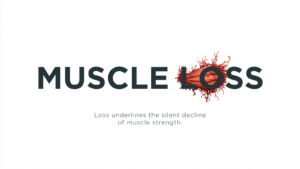
The age-related loss of muscle mass and strength has a medical name: sarcopenia. And 65 is when it shifts from a slow background process into a more significant threat.
Before 60, most adults lose roughly 3 to 5 percent of muscle mass per decade. After 65, that rate can double.
But sarcopenia is not just about how you look.
Muscle is the tissue that keeps you upright when you stumble. It is what lets you get up from a chair without using your arms. It drives your resting metabolism, regulates blood sugar, and protects your joints from the impact of every step you take.
According to the National Institute on Aging, about 30 percent of adults over 70 struggle with basic mobility. That statistic is largely a muscle problem — and it begins accelerating at 65.
For a detailed look at how sarcopenia develops and what it does to long-term health and independence, see our full guide on why sarcopenia is the greatest threat to senior independence.
Can You Actually Build Muscle After 65? What the Research Says
Yes. The evidence is clear.
A randomized controlled trial published in ScienceDirect followed adults aged 70 with pre-sarcopenia through a 10-week resistance training program. The intervention successfully maintained functional strength and increased muscle mass — in adults who were already losing muscle.
A meta-analysis in the European Review of Aging and Physical Activity analyzed 14 randomized controlled trials covering 561 older adults aged 65 to 83. Resistance training produced statistically significant increases in muscle mass, muscle strength, and physical performance across all age groups studied.
The 2025 meta-analysis in Aging Clinical and Experimental Research reviewed 24 trials involving 951 participants aged 60 and above. The conclusion: resistance training significantly improved handgrip strength, walking speed, knee extension strength, and functional capacity.
Adults at 65 have an important advantage over older cohorts: the hormonal environment, while declining, is still more favorable than it will be at 75 or 80. The muscle-building response to training — though blunted compared to younger adults — is stronger at 65 than it will ever be again.
If you are 65 and considering starting resistance training, right now is the best time you have left.
How Building Muscle After 65 Differs From Your 40s
It would not be accurate to say that muscle building at 65 is the same as it was at 45. There are real differences that shape how the program should be designed.
Anabolic Resistance Is Higher
After 65, the muscle protein synthesis response to both exercise and dietary protein is blunted — a phenomenon called anabolic resistance. The dose of both that is needed to trigger meaningful muscle growth is higher.
This means the 20 grams of protein that maintained muscle in your 40s is no longer sufficient. Research consistently points to 25 to 40 grams per meal as the target for seniors to overcome this resistance. See our guide on how much protein seniors actually need for the exact breakdown.
Recovery Takes Longer
Muscles in older adults take longer to repair after a training session. This does not mean training less — it means spacing sessions correctly. The evidence-backed approach is two to three sessions per week with at least one full day of rest between sessions targeting the same muscle groups.
Functional Strength Matters More Than Size
The goal of resistance training at 65 is not the same as at 25. The priority is functional strength — the ability to perform real-world movements safely and independently.
Exercises that train the sit-to-stand movement, the hip hinge, the push and pull pattern, and single-leg balance produce the greatest return on independence and fall prevention. This is the core of functional fitness training for seniors — the approach that research shows keeps seniors independent longest.
The Proven Training Formula for Seniors Over 65
The National Strength and Conditioning Association and multiple peer-reviewed meta-analyses agree on the optimal structure for seniors over 65.
Two to three sessions per week. Two to three sets per major muscle group. Eight to fifteen repetitions per set. Moderate intensity — challenging enough that the last two or three reps are difficult. Progressive overload over time — gradually increasing resistance as strength improves.
Every session should cover the major movement patterns:
- Lower body push — sit-to-stand, squats, step-ups
- Lower body pull — glute bridges, Romanian deadlifts with light weight or band
- Upper body push — wall push-ups, counter push-ups, chest press with bands or light dumbbells
- Upper body pull — seated rows with resistance bands, lat pulldowns
- Core stability — dead bugs, bird dogs, seated core work
You do not need a gym for any of this.
Resistance bands provide the progressive overload needed for muscle adaptation and are ideal for seniors — smooth resistance through the full range of motion, joint-friendly, and usable anywhere. A 10-minute chair-based routine is a completely legitimate and evidence-supported starting point.
The 3 Most Important Exercises for Seniors at 65
1. The Sit-to-Stand
This is the single most functional exercise available to seniors.
Sit in a sturdy chair. Cross your arms over your chest. Stand up fully, then sit back down slowly. That is one repetition. Start with 5, build to 15.
The sit-to-stand trains the quadriceps, glutes, and core simultaneously — the exact muscles responsible for rising from a chair, climbing stairs, and recovering from a stumble before it becomes a fall.
2. The Resistance Band Row
Anchor a resistance band to a door handle or sturdy post. Sit or stand with arms extended, hold the band, and pull your elbows back past your sides.
This trains the upper back, rear shoulders, and biceps — the muscles most responsible for posture. Poor posture after 65 compresses the spine, reduces lung capacity, and shifts balance forward in a way that dramatically increases fall risk.
3. The Glute Bridge
Lie on your back with knees bent and feet flat on the floor. Press through your heels to lift your hips toward the ceiling. Hold two seconds at the top. Lower slowly.
The glutes are the largest and most powerful muscle group in the body. They are also the most rapidly lost after 65 due to prolonged sitting. Rebuilding glute strength directly improves walking efficiency, hip stability, and lower back pain.
Protein: The Non-Negotiable Partner at 65
Exercise provides the stimulus. Protein provides the raw material. Without adequate protein, resistance training produces little actual muscle repair or growth.
The target for adults over 65 is 25 to 40 grams of protein per meal, spread evenly across three meals. This range is higher than general adult guidelines because of the anabolic resistance that characterizes muscle biology after 65.
The best protein sources for this age group are complete proteins containing all essential amino acids: eggs, Greek yogurt, cottage cheese, lean meat, fish, and dairy. Our complete guide to the best protein sources for seniors covers every option with exact gram counts per serving.
The protein-first approach — eating the protein portion of every meal before anything else — is the simplest practical system for consistently hitting these targets. Start with a high-protein breakfast to take advantage of the morning window when muscle protein synthesis is most active.
For seniors who want additional support, creatine supplementation combined with resistance training has strong evidence in older adults. It directly supports the ATP energy system that powers resistance exercise and has been shown to enhance muscle mass gains in seniors.
The Benefits Beyond Muscle: What Strength Training Does After 65
The benefits of building muscle after 65 extend far beyond strength.
- Dramatically Lower Fall Risk
Falls are the leading cause of injury-related death in adults over 65. Most falls result from insufficient leg strength to recover from a stumble. Two to three resistance training sessions per week directly rebuilds the quadriceps, glutes, and ankle stability that prevent falls.
- Faster Metabolism and Better Weight Control
Every pound of muscle tissue burns calories at rest. Fat tissue does not. As muscle is lost after 65, resting metabolism slows — which is why many seniors gain weight without eating more. Rebuilding muscle directly reverses this.
- Better Joint Health and Less Pain
Strong muscles support and protect joints. Many seniors with chronic knee or hip pain find that targeted strengthening of surrounding muscles reduces pain more effectively than rest alone.
- Sharper Cognition
A 2025 meta-analysis of 37 studies found that resistance training had the strongest positive effect on cognitive function of any exercise type — more than aerobic exercise. It boosts brain-derived neurotrophic factor (BDNF), which supports memory, learning, and mental sharpness.
- Independence Longer
The ability to live at home, drive, climb stairs, carry groceries, and care for yourself into your 70s and 80s depends directly on the muscle you preserve and rebuild at 65. The 7 longevity habits of people who stay healthy into their 80s consistently include resistance training as a cornerstone.
Walking Is Not Enough — Here Is What to Add
This is the most important message in this entire guide.
Walking is excellent for cardiovascular health, mood, metabolic health, and daily step goals. It is a cornerstone of senior fitness.
But walking does not stop sarcopenia.
Is walking enough exercise after 60? The honest answer is no — not if preventing muscle loss and maintaining independence is the goal. UT Southwestern Medical Center states it directly: aerobic exercise is important, but it is less effective at maintaining and building muscle than resistance training.
The most effective approach combines both. Daily walking or Zone 2 cardio for cardiovascular and metabolic health, plus two to three resistance training sessions per week for muscle preservation. Together they produce additive effects that neither achieves alone.
If time is limited, even the 5-minute micro strength session done three times per week provides the progressive overload signal that tells muscles to maintain and rebuild.
Frequently Asked Questions
Is it too late to build muscle at 65?
No — and 65 is actually one of the most important times to start. The muscle-building response to resistance training is still active at 65, and the hormonal environment is more favorable than it will be at 70 or 75. Multiple meta-analyses confirm measurable gains in muscle mass and strength in adults across the 65-to-83 age range.
How long does it take to see results from strength training at 65?
Most adults over 65 notice meaningful improvements in strength within four to six weeks of consistent training. Measurable changes in muscle mass typically appear after eight to twelve weeks. The 2025 Aging Clinical and Experimental Research meta-analysis found programs lasting twelve weeks or more produced the strongest results.
What is the best exercise to build muscle for seniors over 65?
Compound movements that train multiple muscle groups simultaneously produce the best results: sit-to-stands, glute bridges, resistance band rows, and wall push-ups. These directly train the muscles most critical for daily function and fall prevention. Resistance bands are ideal — progressive overload without joint impact.
How is building muscle after 65 different from after 70?
The biology is similar but the window is wider at 65. Hormonal levels — particularly testosterone and estrogen — are still higher at 65 than they will be at 70 or 75, meaning the anabolic environment for muscle building is more favorable. Adults at 65 typically recover faster between sessions and show stronger initial responses to progressive overload. For the complete guide to the older age group, see our post: can seniors build muscle after 70.
How much protein does a 65-year-old need to build muscle?
Twenty-five to forty grams per meal, spread evenly across three meals. Research consistently shows that older adults need more protein per meal than younger adults to overcome anabolic resistance and trigger muscle protein synthesis. Spreading protein across meals matters — concentrating it at dinner does not produce the same result.
Can a 65-year-old build muscle without going to the gym?
Absolutely. Bodyweight exercises and resistance bands provide the progressive overload needed for muscle adaptation at home. The 10-minute chair exercise guide and the 5-minute micro strength session are both specifically designed for home-based senior strength training with minimal equipment.
Does testosterone affect muscle building at 65?
Yes — declining testosterone is one of the key drivers of muscle loss after 65 in men, while declining estrogen plays a similar role in women. However, resistance training itself stimulates testosterone production and partially offsets the hormonal decline. Adequate protein and consistent training are the two most impactful variables regardless of hormone levels.
Conclusion
Sixty-five is not the end of the muscle-building story. It is the moment when getting intentional about it matters most.
Two to three resistance training sessions per week. Twenty-five to forty grams of protein at every meal. Progressive overload over time. That is the entire formula.
The muscle you build and preserve at 65 is the physical foundation that determines how you live at 75, at 80, and beyond. It protects your joints, sharpens your mind, keeps your metabolism active, and keeps you on your feet when you stumble.
Stack your training with the broader daily habits that compound over time — quality sleep, an anti-inflammatory diet, and the 5 foods to eat every day — and the results build on each other every single week.
Start this week. Start small. The biology is still with you.