Fibermaxxing is 2026’s fastest-rising nutrition trend — a term coined on social media to describe the deliberate, consistent effort to maximise dietary fiber intake every single day. It sounds almost boringly simple. Eat more fiber. But the research backing it up is anything but boring, and the health outcomes associated with genuinely high fiber intake are among the most consistent in all of nutritional science.
The average adult in the US consumes around 15–17 grams of fiber per day. The recommended daily intake is 25–38 grams. The intake associated with optimal gut health, metabolic function, and longevity in the research literature is closer to 30–50 grams. Almost nobody gets there — and most people don’t realise how wide that gap is, or what it’s costing them.
Fibermaxxing isn’t a new diet. It doesn’t require cutting anything out. It simply means making fiber a daily priority — the same way the most evidence-backed nutrition approaches ask you to prioritize protein and anti-inflammatory foods.
💡 95% of Americans are fiber deficient. It is the single most widespread nutritional gap in the Western diet — yet fiber consistently outperforms most supplements in research on gut health, cardiovascular disease, blood sugar control, weight management, and longevity.
What Fiber Actually Does — And Why Most People Are Getting It Wrong
Fiber is the indigestible part of plant foods — the structural components of fruits, vegetables, legumes, whole grains, nuts, and seeds that your digestive enzymes can’t break down. This is exactly what makes it valuable. Because you can’t digest it, it passes through your gut largely intact, doing a remarkable amount of work along the way.
There are two primary types — and both matter:
- Soluble fiber — dissolves in water to form a gel-like substance that slows digestion, stabilizes blood sugar, lowers LDL cholesterol, and feeds beneficial gut bacteria. Found in oats, apples, beans, flaxseed, and psyllium husk.
- Insoluble fiber — does not dissolve. It adds bulk to stool, speeds intestinal transit, and reduces the risk of constipation and colorectal cancer. Found in whole grains, wheat bran, nuts, and the skins of most fruits and vegetables.
The distinction matters because optimal health requires both — not just one. Most people who do eat fiber tend to get more of one type than the other. Fibermaxxing means consciously including sources of both soluble and insoluble fiber across the day.
🔬 A 2022 landmark review in The Lancet analyzed data from 185 prospective studies and 58 clinical trials covering over 135 million person-years of data. The conclusion: people with the highest fiber intake had 15–30% lower all-cause and cardiovascular mortality, significantly lower rates of type 2 diabetes, colorectal cancer, and stroke — and the dose-response was linear. More fiber, better outcomes, no ceiling identified.
The Gut Microbiome Connection
The most compelling emerging research on fiber isn’t about digestion — it’s about the gut microbiome. Your gut contains roughly 38 trillion bacterial cells — more than the total number of human cells in your body — and the health of that ecosystem influences everything from immune function and inflammation to mood, cognitive function, and metabolic health.
Fiber is the primary food source for beneficial gut bacteria. When these bacteria ferment fiber, they produce short-chain fatty acids (SCFAs) — particularly butyrate, propionate, and acetate — which are the main energy source for the cells lining your colon, reduce systemic inflammation, regulate appetite hormones, and support the integrity of the gut barrier that prevents harmful compounds from entering the bloodstream.
A diet chronically low in fiber essentially starves these bacteria. They decline in number and diversity. The gut barrier weakens. Systemic inflammation rises. And the downstream effects — impaired immune function, increased joint inflammation, disrupted sleep, and compromised hormonal health — begin to compound over time.
🔬 A 2021 Stanford study found that a high-fiber diet increased microbiome diversity and reduced inflammatory markers across the board — with the diversity gains strongest in participants who started from the lowest fiber baseline. You don’t need to eat perfectly to see results. You need to eat more.
The Full Benefits of Fibermaxxing — What the Research Shows
🫀 Cardiovascular Health
Soluble fiber binds to LDL cholesterol in the digestive tract and removes it before it enters circulation — a mechanism so reliable that oat beta-glucan has FDA approval as a cholesterol-lowering food. High fiber diets consistently reduce cardiovascular disease risk by 15–30% in large cohort studies. For anyone concerned about heart health, this is one of the most accessible and evidence-backed dietary changes available.
🩸 Blood Sugar and Insulin Sensitivity
Soluble fiber slows the absorption of sugar from the digestive tract, flattening post-meal glucose spikes and improving insulin sensitivity over time. This is the same mechanism that makes a post-meal walk effective for blood sugar control — fiber achieves it through food. For people managing type 2 diabetes, prediabetes, or simply trying to avoid the energy crashes associated with blood sugar volatility, high fiber intake is one of the most direct dietary levers available.
⚖️ Weight Management
High fiber foods are volumetrically dense and calorie-light — they fill the stomach, slow gastric emptying, and suppress the hunger hormones ghrelin and GLP-1 in ways that reduce overall caloric intake without requiring caloric restriction. Multiple meta-analyses show that increasing fiber intake alone — without changing anything else — produces modest but consistent weight loss over time. Combined with adequate protein, the appetite-suppressing effects are significantly amplified.
🧠 Brain and Cognitive Health
The gut-brain axis — the bidirectional communication pathway between your gut microbiome and your central nervous system — is one of the most actively researched areas in neuroscience. SCFAs produced by fiber fermentation cross the blood-brain barrier and directly influence neuroinflammation, mood regulation, and cognitive function. Low fiber diets are increasingly associated with higher rates of depression, anxiety, and accelerated cognitive decline — all of which are also associated with the chronic low-grade inflammation that poor diet drives.
💪 Muscle and Metabolic Function
Emerging research suggests high fiber diets support muscle protein synthesis indirectly — by reducing the systemic inflammation that impairs muscle repair, improving insulin sensitivity (which enhances amino acid uptake by muscle cells), and supporting the gut microbiome diversity associated with better physical performance. Fibermaxxing and protein prioritization aren’t competing strategies — they’re complementary pillars of the same nutritional foundation.
How to Actually Fibermaxx — The Practical Guide
The target is 30–50 grams of fiber per day from whole food sources. Here’s what that looks like in practice — and the easiest ways to close the gap from where most people start (15–17g) to where the research says the benefits compound.
The Highest-Fiber Foods Worth Building Around
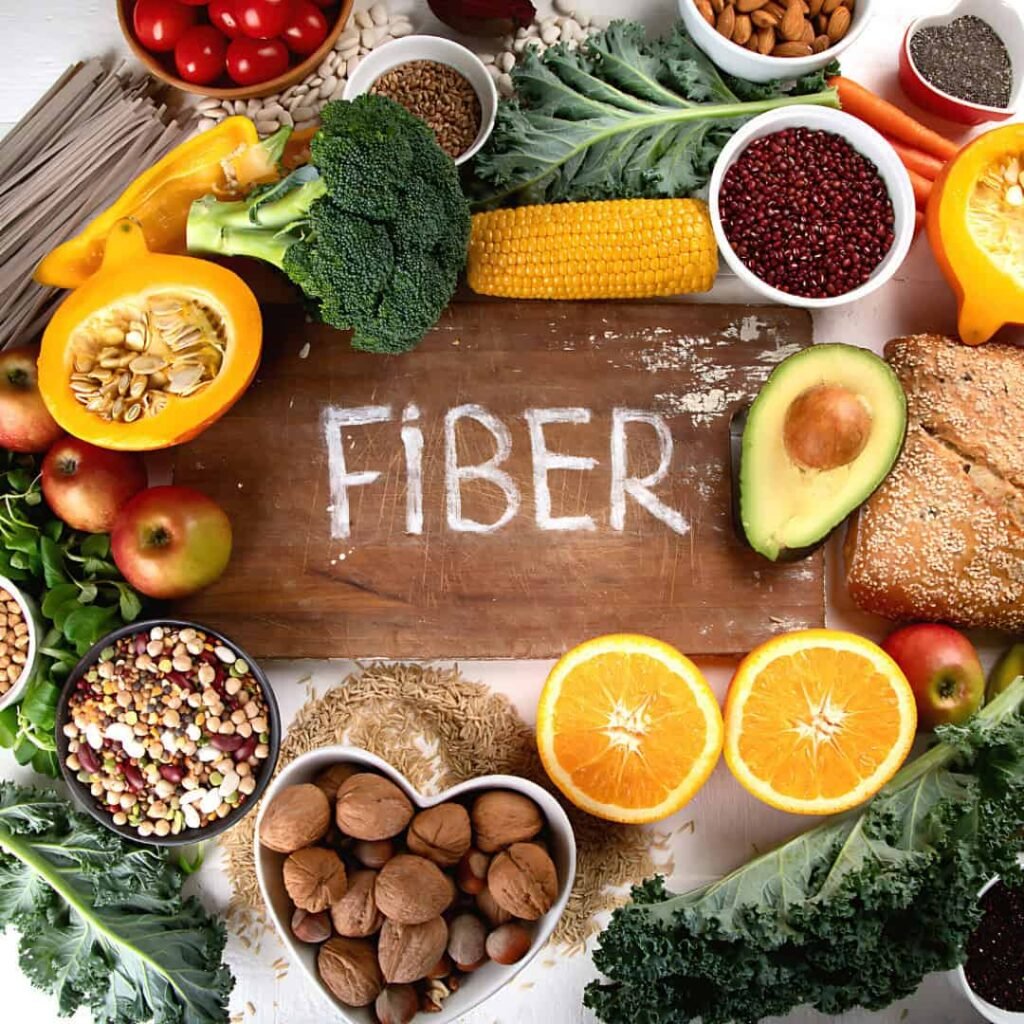
- Legumes — lentils, black beans, chickpeas, kidney beans. A single cup of cooked lentils delivers 15–16g of fiber alone. Cheapest and most efficient fiber source available.
- Oats — particularly rolled or steel-cut. One cup cooked provides 4g fiber, with beta-glucan soluble fiber having the strongest cardiovascular evidence of any single food component.
- Berries — raspberries and blackberries are among the highest-fiber fruits at 6–8g per cup. As longevity foods, they also deliver anthocyanins with strong cardiovascular and cognitive evidence.
- Avocado — one whole avocado contains 10–13g of fiber plus heart-healthy monounsaturated fats. One of the most nutrient-dense single foods available.
- Chia seeds — two tablespoons deliver 10g of fiber, predominantly soluble, which absorbs water and forms a gel that dramatically slows digestion. Easiest single fiber addition to any diet.
- Vegetables with skins — broccoli (5g per cup), Brussels sprouts (4g), carrots (3.6g), and sweet potatoes with skin (4g). The skin is where the fiber lives — peeling removes a significant portion.
- Whole grains — quinoa, brown rice, barley, and whole wheat. Swapping refined grains for whole grains is one of the single highest-leverage fibermaxxing changes.
The Simplest Daily Framework
You don’t need to overhaul your diet. You need to make three consistent swaps:
- Breakfast — add chia seeds or ground flaxseed to yogurt, oatmeal, or a smoothie. Instant 8–10g addition with zero meal prep.
- Lunch or dinner — add a half cup of legumes to any meal. Stir into soup, toss into a salad, blend into a sauce. 7–8g per serving.
- Snacks — swap processed snacks for fruit with skin, raw vegetables, or a small handful of nuts. 3–5g per snack.
These three changes alone can take most people from 15g to 28–30g daily — without a single dramatic dietary change. Building these into your daily habit stack alongside protein prioritization and anti-inflammatory eating creates a nutritional foundation that most people never come close to achieving.
⚠️ Increase fiber gradually — adding 5g per week rather than all at once. A sudden large increase in fiber intake causes gas, bloating, and digestive discomfort in most people. The gut bacteria that process fiber need time to multiply and adapt. Slow and consistent wins here.
🥗 Start today: Add one tablespoon of chia seeds to your breakfast tomorrow. That’s 5g of fiber in 10 seconds. Do it every day for a week. That single habit moves the needle more than most people’s entire nutrition overhaul.
Frequently Asked Questions
What exactly is fibermaxxing?
Fibermaxxing is the practice of deliberately maximizing daily dietary fiber intake — consistently hitting 30–50g per day from whole food sources rather than the 15g average most people consume. The term originated on social media in 2026 but the nutritional strategy behind it is backed by decades of research. It’s not a diet — it’s a daily nutritional priority, like protein or hydration.
How much fiber do I actually need per day?
Official guidelines set the minimum at 25g for women and 38g for men. The research on optimal health outcomes — cardiovascular disease, gut health, longevity — points to 30–50g daily as the sweet spot. Most adults consume 15–17g. Closing that gap is one of the highest-leverage nutritional changes most people can make.
Can I get enough fiber from supplements like psyllium husk?
Psyllium husk is an effective soluble fiber supplement with good evidence for cholesterol reduction and blood sugar control. But whole food fiber sources deliver fiber plus micronutrients, polyphenols, and phytonutrients that supplements don’t replicate. Use psyllium husk to supplement a whole food fiber foundation — not to replace it.
Will eating more fiber help me lose weight?
High fiber diets produce modest but consistent weight loss through appetite suppression, reduced caloric density of meals, and improved metabolic function. The effect is amplified significantly when combined with adequate protein intake — the two together create a powerful satiety combination that reduces overall caloric intake without hunger.
Is fibermaxxing safe for people with digestive conditions like IBS?
This depends on the type of IBS and the individual. High-FODMAP fiber sources — certain legumes, onions, and some fruits — can trigger IBS symptoms in sensitive individuals. A low-FODMAP approach to fiber still allows significant fiber intake through low-FODMAP sources like oats, carrots, zucchini, and strawberries. Always consult a gastroenterologist or registered dietitian before significantly increasing fiber if you have a diagnosed digestive condition.
What's the best single food to add for fibermaxxing?
Chia seeds — two tablespoons deliver 10g of predominantly soluble fiber, require zero preparation, and can be added to virtually any food or drink. Combined with berries and whole grains at breakfast, you can hit 15–18g of fiber before lunch.
How does fiber affect inflammation?
Fiber feeds the gut bacteria that produce short-chain fatty acids — which are among the most potent natural anti-inflammatory compounds in the body. Chronically low fiber intake is directly associated with higher levels of systemic inflammation, which drives joint pain, muscle loss, cardiovascular disease, and cognitive decline. Fibermaxxing is one of the most direct dietary levers for reducing chronic inflammation available.
The Short Version
Fibermaxxing means deliberately hitting 30–50g of dietary fiber every day — more than double what most people currently eat. The research behind it is among the most consistent in nutrition science:
- 15–30% lower cardiovascular mortality in people with the highest fiber intake vs. lowest
- Significant improvements in gut microbiome diversity and reductions in systemic inflammation
- Better blood sugar control and insulin sensitivity — without medication
- Consistent weight loss through appetite suppression and reduced caloric density
- Cognitive and mood benefits through the gut-brain axis and reduced neuroinflammation
The three easiest daily changes: add chia seeds to breakfast, add legumes to one meal, swap processed snacks for fruit or raw vegetables. Combined with adequate protein and anti-inflammatory foods, this is the nutritional foundation that most of the world’s longest-lived populations have in common.
Related reading:
- 5 Foods Seniors Should Eat Every Day — Including the Highest-Fiber Longevity Foods
- The Best Protein Sources — The Other Half of the Nutritional Foundation
- Top 5 Ways to Reduce Joint Pain Without Medication — How Fiber Reduces Inflammation
- 10 Small Daily Habits That Compound Into Major Health Gains
- Testosterone and Aging — How Gut Health Affects Hormonal Function
- Sarcopenia — How Anti-Inflammatory Nutrition Supports Muscle Preservation
- The 12-3-30 Treadmill Workout — Pair Fibermaxxing With the Right Exercise
⚠️ Medical Disclaimer: This article is for informational and educational purposes only and does not constitute medical advice. Always consult your physician or a registered dietitian before making significant changes to your diet, particularly if you have a digestive condition, diabetes, cardiovascular disease, or other chronic health condition.