What Is the 12-3-30 Workout?
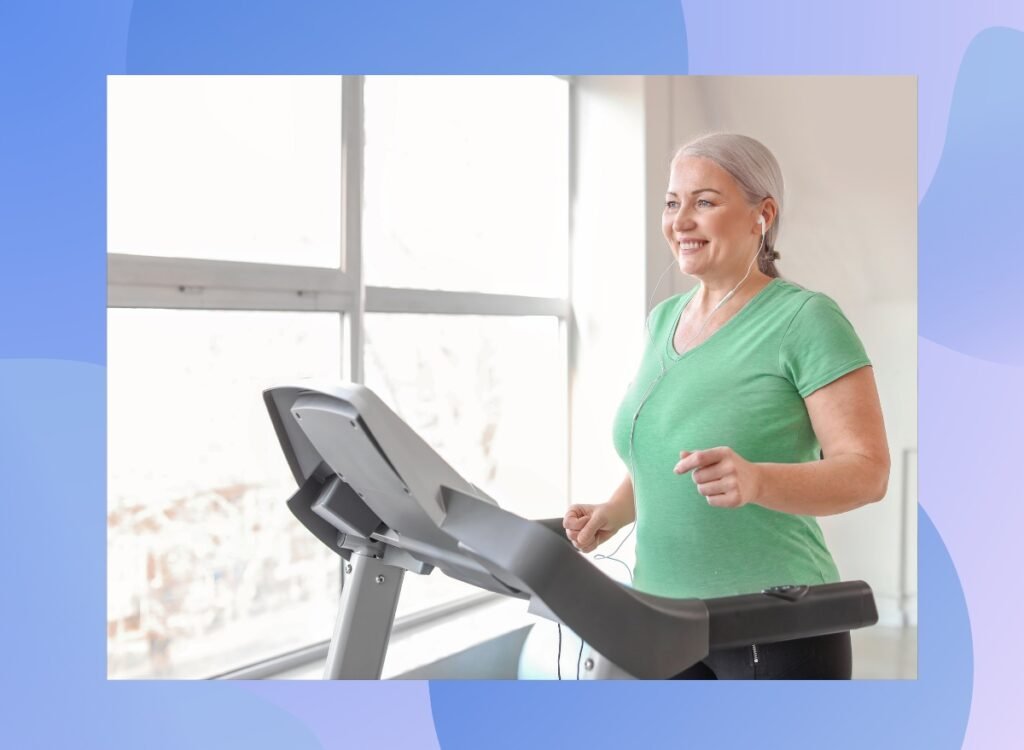
The 12-3-30 is about as simple as fitness gets. Set your treadmill to a 12% incline, walk at 3 miles per hour, and keep going for 30 minutes. That’s it. No running. No intervals. No complicated programming.
It was created by influencer Lauren Giraldo in 2019 and went viral almost immediately.
💡 The #1230workout hashtag has accumulated billions of views on TikTok, making it one of the most searched fitness terms on the internet — and one of the few viral trends backed by actual peer-reviewed research.
In 2025, two independent studies finally put the workout under the scientific microscope. The results are genuinely useful for anyone over 60 who’s been wondering whether the hype is real.
What the Research Actually Says
The American Council on Exercise commissioned a study at Western Colorado University, and a second study was published in the International Journal of Exercise Science. Here’s what they found:
- Burns ~220 calories per 30-minute session — meaningful cardio output without a single step of running
- Burns more fat than running — 41% of energy came from fat during 12-3-30 vs. 33% during running, when both sessions burned the same total calories
- Qualifies as moderate-intensity cardio — average heart rate of 124 bpm, putting it squarely in the cardiovascular training zone
- High enjoyment scores — participants reported genuinely liking the workout, which matters more than people think for long-term adherence
- Lower joint impact than running — incline walking reduces peak knee stress compared to level running, making it friendlier to aging joints
💡 ACE lead researcher Dr. Lance Dalleck said the 12-3-30 workout ‘confirms its place as a valuable tool for individuals looking to improve their fitness, whether they’re beginners or seeking a time-efficient routine.’
One important caveat: the research participants were young adults (average age 28). The workouts weren’t studied specifically in seniors. That’s exactly why a senior-specific breakdown matters — and why the modifications below are essential.
Why the 12-3-30 Is Particularly Well-Suited to Seniors
Most cardio options for older adults involve compromise. Running is too high-impact for aging joints. Cycling requires equipment or balance. Swimming requires a pool. The 12-3-30 sidesteps most of these issues:
- No running required — ever. The entire workout is walking, which dramatically reduces the impact stress that leads to knee, hip, and shin injuries common in seniors who try jogging
- Engages major muscle groups. Incline walking activates the glutes, hamstrings, and quads far more than flat walking — building functional leg strength that directly supports getting up from chairs, climbing stairs, and reducing fall risk
- Cardiovascular benefit without cardiovascular risk. The moderate intensity (not maximal) is appropriate for most seniors with medical clearance, including those managing blood pressure and diabetes
- Works the same muscles targeted by resistance training. Pairing 12-3-30 with seated resistance band exercises creates a highly effective complete fitness program
- Simple and repeatable. There are no decisions to make, no intervals to time, no skills to learn. You set the treadmill and walk. That simplicity is a feature, not a limitation — it eliminates the friction that stops most people from exercising consistently
The One Problem — And How to Fix It
Here’s the honest part: a 12% incline is steep. Most people don’t realize how steep until they’re on the treadmill. For a deconditioned senior, jumping straight to 12% for 30 minutes is a reliable way to end up with Achilles tendon pain, lower back strain, or a very unpleasant first experience that puts you off the whole idea.
⚠️ Experts including NYU Langone sports medicine specialist Dr. Dennis Cardone note that a steep incline is a significant stressor on the lower back, hamstrings, Achilles tendon, and plantar fascia. Seniors should build up gradually rather than starting at the full 12% protocol.
The fix is simple: start lower and build up. The incline and duration are just numbers. The workout is still effective at modified settings — and much safer.
The Senior-Modified 12-3-30 Progressive Plan
Use this 8-week ramp-up to build toward the full workout safely. The speed (3 mph) stays constant — only the incline and duration change.
Phase | Incline | Duration | Who It’s For |
|---|---|---|---|
Weeks 1–2 | 6% | 15–20 min | Complete beginners, post-surgery recovery, limited mobility |
Weeks 3–4 | 8% | 20–25 min | Seniors with moderate fitness, no acute joint issues |
Weeks 5–6 | 10% | 25–30 min | Building toward full workout, comfortable at lower settings |
Weeks 7–8+ | 12% | 30 min | Full 12-3-30 — earned, not assumed |
If 3 mph feels too fast at any incline, drop to 2.5 mph. The incline is doing the work — the speed matters far less than most people assume. A slower pace at higher incline is still an excellent workout.
Form Tips That Matter Most for Seniors
- Don’t hold the handrails. Gripping the rails offloads effort from your legs and reduces the cardiovascular benefit. Use them briefly for balance if needed, but the goal is hands-free walking
- Keep your posture upright. Seniors tend to lean forward on inclines. Keep your chest up and eyes forward — this protects the lower back and keeps the glutes engaged
- Shorten your stride slightly. Incline walking naturally shortens stride length. Don’t fight it. Trying to take long strides on a steep incline strains the Achilles and hamstrings
- Wear proper footwear. Flat-soled shoes are a mismatch for incline walking. Use well-cushioned walking or running shoes with heel support
Warm up first. Start at 0% incline at 2–2.5 mph for 3–5 minutes before increasing to your target settings. This matters more for seniors than younger exercisers
How Often Should Seniors Do the 12-3-30?
The original program recommends 5 days per week. For most seniors, 3–4 days per week is more appropriate — it provides sufficient cardiovascular stimulus while allowing the recovery time aging muscles and joints require.
On your off days, consider pairing with seated resistance band exercises or chair-based strength training. Cardio and resistance training are complementary — together they address muscle loss, cardiovascular health, and the inflammation that drives so many senior health problems.
💡 The best cardio workout is the one you’ll actually do consistently. The 12-3-30’s simplicity and low running requirement are genuine advantages for seniors building a long-term movement habit.
Don't Have a Treadmill? Do This Instead
A treadmill makes this workout easy to control, but it’s not strictly required. If you don’t have access to one:
- Outdoor hill walking: Find a consistently steep hill in your neighborhood and walk up and down for 30 minutes. The grade won’t be exactly 12%, but the principles are identical
- Incline on a walking pad: Many walking pads now offer incline settings and are more compact and affordable than full treadmills — a growing option for senior home fitness
Stair walking: Repeatedly walking up and down a flight of stairs engages the same muscles with similar cardiovascular demand. Use a handrail for safety and build duration gradually
Quick Answers: 12-3-30 for Seniors
Is 12-3-30 safe after hip or knee replacement?
Consult your surgeon first. Many patients are cleared for incline treadmill walking after hip replacement recovery at around the 8–12 week mark — but always follow your specific post-operative guidelines. Start at a much lower incline (4–6%) and shorter duration than the standard protocol.
Will 12-3-30 help with weight loss?
It can be a meaningful component of a weight management program. ~220 calories per session, 3–4 times per week, adds up. But nutrition drives the majority of weight change — particularly adequate protein intake to preserve muscle while losing fat.
What if I can't do 30 minutes at the start?
Do 15 minutes and feel good about it. Consistency over time beats perfect effort occasionally. Add 2–3 minutes per session as your fitness builds. Most seniors reach the full 30 minutes within 4–6 weeks of starting at a modified protocol.
Is it better than a regular flat walk?
Yes — meaningfully so. Incline walking activates significantly more muscle than flat walking, burns more calories, and produces greater cardiovascular demand for the same duration. The glutes and posterior chain engagement is particularly valuable for seniors, where weakness in these muscles contributes directly to falls and poor posture.
Ready to Try It?
The 12-3-30 is one of the rare viral fitness trends that actually holds up under scrutiny — and one of the rare workouts that becomes more appropriate for seniors, not less, compared to the alternatives. The incline does the work so your joints don’t have to absorb the punishment of running. The 30-minute cap keeps it manageable. The simplicity makes it sustainable.
Start at 6% incline for 15 minutes this week. Build from there.
Build the complete senior fitness foundation:
- Seated Resistance Band Exercises for Seniors — Strength Training to Pair with Cardio
- Chair Workouts for Seniors: Build Strength Without the Floor
- Foods That Fight Inflammation — The Anti-Inflammatory Diet Guide
- How Much Protein Do Seniors Really Need?
- Exercise After Hip Replacement: What’s Safe and When to Start
⚠️ Medical Disclaimer: This article is for informational purposes only and is not medical advice. Consult your physician before beginning any new exercise program, particularly if you have a cardiovascular condition, joint replacement, diabetes, or other chronic health condition.