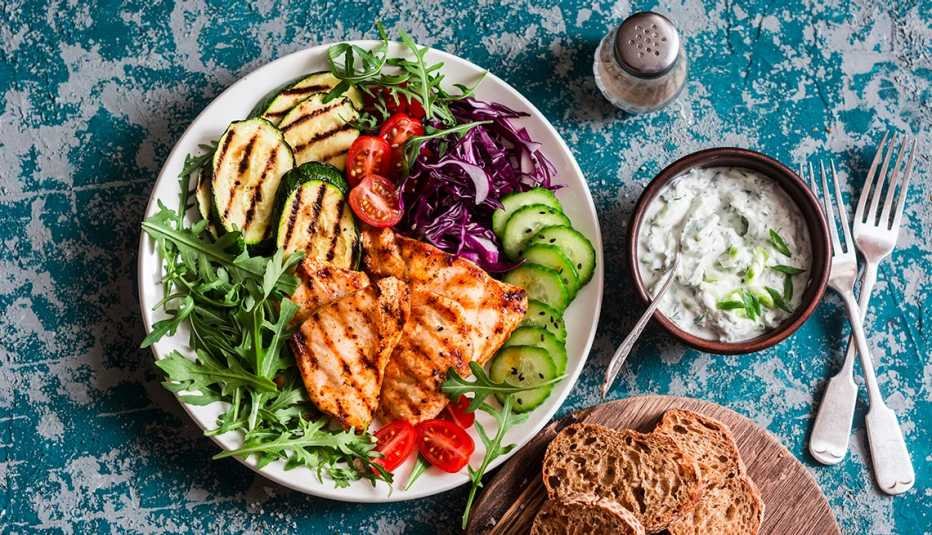
Rather than chasing individual superfoods, the most evidence-backed approach to dietary inflammation is a pattern — and the Mediterranean diet is the most studied anti-inflammatory dietary pattern in the world, with over 10,000 published studies and consistent results across diverse populations.
The Mediterranean diet emphasizes:
- Abundant vegetables and fruits — especially leafy greens, tomatoes, and berries
- Whole grains as the primary carbohydrate source
- Legumes 4+ times per week
- Fatty fish 2–3 times per week
- Extra virgin olive oil as the primary fat
- Nuts and seeds daily
- Moderate amounts of poultry, eggs, and dairy
- Red meat limited to 1–2 times per week or less
- Herbs and spices — especially garlic, rosemary, turmeric, and ginger — used generously
- Water and green tea as primary beverages
💡 The PREDIMED trial — a landmark Spanish study of over 7,000 adults at cardiovascular risk — found that participants following a Mediterranean diet supplemented with olive oil or nuts had a 30% lower rate of major cardiovascular events compared to a low-fat diet. The trial was stopped early because the benefit was so clear it was deemed unethical to keep the control group on a low-fat diet.
For seniors, the Mediterranean diet also supports muscle maintenance alongside resistance training through its emphasis on protein from fish and legumes and its anti-inflammatory effect on muscle tissue.
Practical: What a Week of Anti-Inflammatory Eating Looks Like for Seniors
Here’s how this translates into a real week of eating — simple, affordable, and realistic for seniors cooking at home or with limited mobility.
Breakfast Ideas
- Oatmeal topped with blueberries, walnuts, and a drizzle of honey
- Greek yogurt with mixed berries and ground flaxseed
- Two eggs scrambled with spinach and cherry tomatoes, cooked in olive oil
- Avocado toast on whole grain bread with a sprinkle of turmeric and black pepper
Lunch Ideas
- Large salad with mixed greens, canned sardines or salmon, olive oil and lemon dressing, cherry tomatoes, cucumber
- Lentil soup with garlic, turmeric, and a squeeze of lemon
- Whole grain wrap with hummus, roasted vegetables, and leafy greens
- Black bean and vegetable bowl with brown rice and avocado
Dinner Ideas
- Baked salmon with roasted broccoli and sweet potato, olive oil throughout
- Chicken thighs with turmeric, garlic, and ginger over quinoa with wilted spinach
- Sardine pasta: whole wheat pasta, canned sardines, cherry tomatoes, garlic, capers, olive oil
- Vegetarian night: chickpea and spinach curry with brown rice and plain yogurt
Snacks
- A small handful of walnuts and a square of dark chocolate (70%+ cocoa)
- Celery or carrot sticks with almond butter
- A cup of green tea with a small bowl of mixed berries
- Half an avocado with a pinch of sea salt and red pepper flakes
Should Seniors Take Anti-Inflammatory Supplements?
Food first — always. But several supplements have meaningful evidence for supporting anti-inflammatory outcomes in older adults when dietary sources are insufficient:
- Omega-3 fish oil (EPA + DHA): The most evidence-backed anti-inflammatory supplement. Useful if you don’t eat fatty fish 2–3 times per week. Look for products that provide at least 1,000mg combined EPA+DHA per serving.
- Curcumin with piperine: Standard dietary turmeric doesn’t provide therapeutic doses of curcumin. If using as a supplement, look for formulations with piperine (black pepper extract) or liposomal delivery for adequate absorption.
- Vitamin D3: Deficiency is extremely common in seniors and is independently associated with higher inflammatory markers. Most older adults benefit from 1,000–2,000 IU daily, ideally paired with vitamin K2.
- Magnesium: Low magnesium is highly prevalent in seniors and is associated with elevated CRP. Magnesium glycinate or malate is well-tolerated and bioavailable.
- Probiotics: Gut health is central to inflammation regulation. A diverse gut microbiome produces short-chain fatty acids that directly suppress inflammatory pathways. Probiotic supplementation and fermented foods (yogurt, kefir, kimchi, sauerkraut) both support microbiome diversity.
Always discuss supplements with your doctor or pharmacist, especially if you take blood thinners, diabetes medication, or other prescription drugs — some supplements have meaningful interactions.
The Nutrition-Exercise Connection: Why Both Matter
Diet and exercise work synergistically on inflammation — neither is fully effective without the other. Physical activity has powerful anti-inflammatory effects through multiple mechanisms, including the release of myokines (anti-inflammatory proteins secreted by contracting muscle). But exercise also increases protein and micronutrient needs that only a quality diet can meet.
This is especially important for seniors fighting sarcopenia — the age-related muscle loss that accelerates inflammation and frailty. The combination of resistance training (including seated band exercises) and an anti-inflammatory, protein-rich diet is the most effective intervention available for maintaining muscle, function, and quality of life in older adults.
If you’re also recovering from a procedure like a hip replacement, anti-inflammatory nutrition takes on additional urgency — it directly affects healing speed, pain levels, and how quickly you can return to exercise.
Frequently Asked Questions
How long does it take for an anti-inflammatory diet to work?
Many seniors notice reduced joint stiffness and improved energy within 2–4 weeks of consistent dietary changes. Measurable reductions in inflammatory blood markers (like CRP) typically become detectable within 6–12 weeks. Long-term disease risk reduction accrues over months and years. The key is consistency — occasional healthy meals don’t move the needle meaningfully.
Is an anti-inflammatory diet expensive?
It doesn’t have to be. Canned sardines, lentils, dried beans, frozen berries, oats, eggs, and canned tomatoes are among the cheapest foods available — and all are powerfully anti-inflammatory. The Mediterranean diet has been practiced by people of modest means for centuries. The most expensive item in the pattern — olive oil — is a worthwhile investment given the volume of evidence behind it.
Can an anti-inflammatory diet help with arthritis pain?
Yes — with an important caveat. Diet can reduce the systemic inflammation that drives and amplifies arthritis symptoms, but it doesn’t reverse structural joint damage. Clinical studies show that Mediterranean diet adherence is associated with lower pain scores and better physical function in arthritis patients. It’s most effective as part of a comprehensive approach that includes appropriate exercise (see our seated exercise guide for limited mobility) and medical management.
What about nightshade vegetables — should seniors avoid them for inflammation?
The idea that nightshades (tomatoes, peppers, eggplant, potatoes) worsen inflammation is a popular belief with very little scientific support. The research evidence strongly favors these vegetables as anti-inflammatory — tomatoes especially are among the most studied anti-inflammatory foods. Unless you have a confirmed individual sensitivity, there’s no reason to avoid them.
Do I need to follow the diet perfectly to see benefits?
No — this is important. Research on dietary patterns consistently shows that partial adherence produces meaningful benefits. Moving from a highly processed diet to one that’s 60–70% aligned with anti-inflammatory principles can produce significant improvements. The goal is a sustainable long-term shift, not perfection.
Start Small, Stay Consistent
You don’t need to overhaul your entire diet overnight. Pick three changes from this guide and commit to them for the next 30 days:
- Add fatty fish twice a week — canned salmon or sardines make this easy and affordable
- Switch your cooking oil to extra virgin olive oil
- Add a daily handful of berries — fresh or frozen, both work equally well
These three changes alone have a meaningful combined effect on inflammatory pathways — and they’re achievable this week without a trip to a specialty grocery store.
Explore the full Se7en Symbols senior health library:
- Seated Resistance Band Exercises for Seniors with Limited Mobility
- Exercise After Hip Replacement: What’s Safe and When to Start
- What Is Sarcopenia? How to Stop Muscle Loss After 60
- How Much Protein Do Seniors Really Need?
- Chair Workouts for Seniors: Build Strength Without the Floor