| ❓ Cause of Weight Gain | 🔬 What’s Actually Happening | ✅ The Fix |
|---|---|---|
| 1. Muscle Loss (Sarcopenia) |
You lose 3–8% of muscle per decade after 60. Muscle burns calories at rest — fat does not. Less muscle = lower resting metabolism = same diet now causes weight gain. | Resistance training 2–3x per week. Even 5-minute sessions with resistance bands provide the muscle-preserving signal. |
| 2. Hormonal Changes (Testosterone / Estrogen) |
Lower testosterone (men) and estrogen (women post-menopause) promote fat storage — especially belly fat — and accelerate muscle loss simultaneously. | Resistance training and adequate protein support hormone balance. Discuss hormone levels with your doctor if weight gain is rapid or unexplained. |
| 3. Slower Metabolism (Basal Metabolic Rate) |
After age 60, basal metabolic rate declines ~0.7% per year (Science, 2021). By 70, you burn significantly fewer calories per day — even without changing body size. | Rebuild metabolism through muscle. 25–30g protein per meal raises the thermic effect of food. Daily movement counters the decline. |
| 4. Insulin Resistance (Blood Sugar Changes) |
Cells become less responsive to insulin after 60. Carbohydrates trigger more fat storage instead of energy production — especially around the abdomen. | Reduce refined carbs. Increase soluble fiber (legumes, oats). Resistance training and walking both directly improve insulin sensitivity. |
| 5. Poor Sleep (Cortisol & Hunger Hormones) |
Poor sleep elevates cortisol (directs fat to abdomen), raises ghrelin (hunger), and lowers leptin (fullness). You eat more and store more — without choosing to. | Consistent bedtime and wake time every day. Same time, every day — more effective than any sleep supplement. |
| 6. Less Background Movement (NEAT Decline) |
Retirement eliminates hundreds of calories of daily background movement. This invisible calorie burn drops significantly without most people noticing. | Micro workouts spread throughout the day. Stand every 30–45 minutes. Short walks after meals. These directly replace lost NEAT. |
| 7. Medications (Common Prescriptions) |
Beta-blockers, antidepressants, corticosteroids, and some diabetes medications list weight gain as a documented side effect. | Discuss with your doctor if weight gain coincided with a new prescription or dosage change. Never stop a medication without medical advice. |
Sources: Science (2021) — 6,421 participants across 29 countries · Harvard Health — Metabolism and Age · Mayo Clinic Proceedings — Hormonal Changes and Body Composition · PMC — Metabolic Changes in Aging | Metabolism remains stable ages 20–60, then declines 0.7% per year after 60
This is one of the most common and most frustrating experiences for adults after 60.
You are eating less than you used to. Maybe you have even cut back significantly.
And yet the weight keeps creeping up. The clothes keep getting tighter. The number on the scale keeps climbing.
The good news is that this is not your imagination, and it is not a lack of willpower.
There are specific biological changes that happen after 60 that make weight gain almost inevitable without a targeted response. Understanding exactly what those changes are — and why your old approach no longer works — is the key to turning things around.
🔬 Science (2021): A landmark study of 6,421 people across 29 countries found that metabolism remains stable between ages 20 and 60. After age 60, it declines by about 0.7% per year. Harvard Health confirmed this, noting that adjusted metabolic rate was 20% lower than expected in adults 60 and above. The changes are real — but they are not your fault.
Reason 1: You Are Losing Muscle — And Muscle Burns Calories
This is the biggest reason, and it is one most people never hear about.
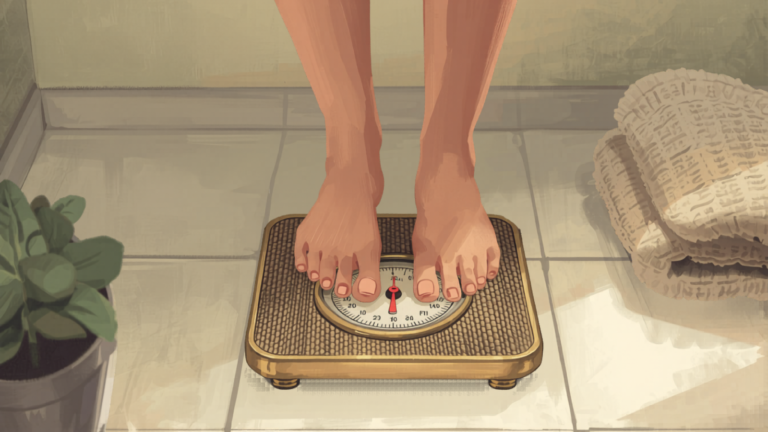
After 60, adults lose 3–8% of their muscle mass every decade — and the rate accelerates after 60. Most adults are losing significant muscle mass without noticing it because the scale does not show the difference between muscle and fat.
Here is the critical part.
Muscle tissue burns calories even while you are sitting still. Fat tissue does not.
So as you lose muscle, your body needs fewer and fewer calories to function. The same meals that maintained your weight at 50 now cause weight gain at 65 — even if you eat the exact same amount. This is not a diet failure. It is a muscle loss problem.
💡 The fix is not eating less. The fix is rebuilding the muscle that drives your resting metabolism. Two to three resistance training sessions per week — even short ones — directly reverses this process.
Reason 2: Your Hormones Have Changed How Your Body Stores Fat
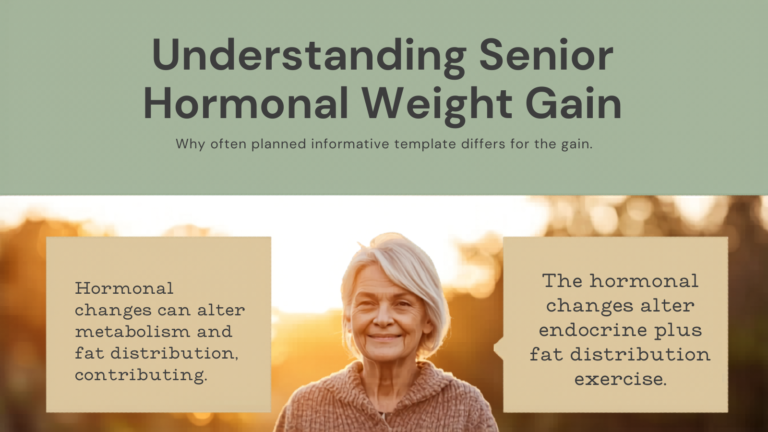
Hormones are powerful chemical messengers that control where your body stores energy.
After 60, testosterone declines in men and estrogen drops sharply in women after menopause. Both of these hormones help maintain muscle mass and regulate fat storage.
When they fall, the body makes two changes that directly cause weight gain.
First, it stores more fat — especially around the abdomen. Second, it loses muscle faster, which further reduces your resting calorie burn.
For women, the drop in estrogen after menopause shifts fat storage from the hips and thighs to the abdomen. This is why many women notice belly fat appearing or worsening after menopause even without eating more. For a deeper dive into how this compounds with other factors, see our full guide on how to lose belly fat after 60.
🔬 Mayo Clinic Proceedings (2021): The decline in testosterone and estrogen with age plays a critical role in increased fat mass and decreased lean tissue. In men aged 60–80 with low testosterone, subcutaneous and visceral fat were significantly elevated compared to men with normal levels.
Reason 3: Your Metabolism Has Actually Slowed Down
You may have heard that metabolism slows in your 40s. That turns out not to be true.
The landmark 2021 Science study — tracking 6,421 people across their lifetimes — found that metabolism stays remarkably stable from age 20 to 60.
But after 60? It does slow down.
After 60, your basal metabolic rate — the number of calories you burn just by being alive — declines by about 0.7% per year. That sounds small. But by age 70, your body is burning meaningfully fewer calories per day than it did at 60, even accounting for changes in body size.
One theory, supported by Harvard Health research, is that major organs — the heart, liver, kidneys, and brain — account for 65% of your resting energy expenditure. As organ function changes with age, so does their energy demand.
The result: your body requires fewer calories than it used to. Eating the same amount as always now creates a caloric surplus — even if that amount would have been completely fine a decade ago.
Reason 4: Insulin Resistance Makes Carbohydrates Store as Fat
Insulin is the hormone that tells your cells to absorb glucose from your blood for energy.
After 60, insulin sensitivity decreases. This means your cells become less responsive to insulin’s signal.
When that happens, your body produces more insulin to compensate. And higher insulin levels directly promote fat storage — especially around the abdomen.
Meals that your body once efficiently converted to energy now trigger a larger insulin response. More of that energy gets stored as fat instead of burned. This is why refined carbohydrates and sugar become much more problematic after 60 than they were in earlier decades.
The good news is that insulin sensitivity is directly improved by resistance training, Zone 2 cardio, and dietary changes — specifically increasing protein and fiber while reducing refined carbs.
🔬 PMC Metabolic Changes in Aging: Increased visceral fat causes excess free fatty acid delivery to the liver, which worsens insulin resistance — creating a self-reinforcing cycle where more fat leads to more insulin resistance, which leads to more fat storage.
Reason 5: Poor Sleep Is Making You Store More Fat
This one surprises most people.
When you do not sleep enough, your body produces more cortisol — the stress hormone.
Cortisol directly tells your body to store fat. Specifically, it directs that storage to the abdomen — the most metabolically harmful location for visceral fat.
Poor sleep also disrupts two hunger hormones: ghrelin, which makes you feel hungry, and leptin, which tells you when you are full. When you are sleep-deprived, ghrelin goes up and leptin goes down. You feel hungrier and cannot tell when you have had enough.
The result is that seniors who sleep poorly are fighting weight gain from multiple directions simultaneously — elevated cortisol driving fat storage, disrupted hunger signals driving overconsumption, and reduced energy levels driving less movement. This is why consistent sleep timing is one of the most impactful single changes available for weight management after 60.
💡 Research from Johns Hopkins confirms that drinking water regularly and staying hydrated can stimulate metabolism and help your body feel full. Many seniors mistake thirst for hunger — drinking a full glass of water before meals is one of the simplest ways to reduce unintentional overconsumption.
Reason 6: You Are Moving Less — Even If You Do Not Realize It
Most people track their formal exercise. They count their walks and their gym sessions.
What they do not track is everything else — the background movement that fills the rest of the day.
This is called NEAT: non-exercise activity thermogenesis. It includes standing, fidgeting, walking to the car, doing household tasks, taking the stairs.
Research shows that NEAT can account for several hundred calories of daily energy expenditure. And it declines significantly with age — not necessarily because seniors choose to move less, but because retirement eliminates the constant background movement that came with a work routine, walking between meetings, taking stairs in an office building, and simply having somewhere to be.
This is one of the strongest arguments for micro workouts spread throughout the day rather than a single exercise session. Multiple short movement breaks directly address NEAT decline and reduce the extended sitting time that independently worsens insulin resistance.
Reason 7: Your Medications May Be Contributing
This is the reason most seniors never think to check — and one of the most common hidden contributors to unexplained weight gain.
Several commonly prescribed medications for seniors have weight gain as a documented side effect.
- Beta-blockers — for heart conditions and blood pressure
- Antidepressants and antipsychotics — particularly SSRIs and older-generation medications
- Corticosteroids — for inflammation, asthma, or autoimmune conditions
- Insulin and sulfonylureas — for type 2 diabetes
- Antihistamines — common over-the-counter allergy medications
These medications can cause weight gain by stimulating appetite, reducing metabolic rate, causing fluid retention, or directly promoting fat storage.
If you have started gaining weight shortly after beginning a new medication, or after a dosage change, that connection is worth discussing with your doctor. Never stop a prescribed medication without medical advice — but the conversation about weight gain as a side effect is entirely appropriate to have.
What Actually Fixes Weight Gain After 60
Now that you understand why the old approach stopped working, here is what actually does work.
The foundation is rebuilding muscle. Two to three resistance training sessions per week — targeting all major muscle groups — reverses the muscle loss driving your slowing metabolism. Even the 5-minute micro strength sessions done consistently provide the progressive overload signal that preserves lean tissue.
Alongside that, increasing dietary protein to 25–30g per meal is non-negotiable. Protein is more thermogenic than carbohydrates or fat — it costs more calories to digest. And it directly preserves the muscle that drives your resting metabolism. The protein-first approach ensures you hit these targets consistently at every meal.
For cardio, Zone 2 walking and the 12-3-30 incline treadmill method both provide the low-to-moderate intensity aerobic activity that preferentially burns visceral fat as fuel. Thirty minutes of daily walking is the most researched and accessible intervention available.
Finally, reducing refined carbohydrates and replacing them with high-fiber whole foods directly improves the insulin sensitivity that after-60 metabolism requires. The anti-inflammatory dietary pattern and daily fiber-rich eating address both visceral fat and insulin resistance simultaneously.
💡 Eating less is not the answer after 60. Eating less while losing muscle only accelerates the problem. The goal is eating better — more protein, more fiber, fewer refined carbs — while adding resistance training to rebuild the metabolic engine that calorie restriction alone will never fix.
Frequently Asked Questions
Why am I gaining weight eating the same amount after 60?
Because your body has changed in ways that mean the same diet now produces a caloric surplus. Muscle loss reduces your resting metabolic rate. Hormonal changes increase fat storage, particularly in the abdomen. And after 60, your basal metabolic rate genuinely declines by about 0.7% per year. The same meals that maintained your weight a decade ago now cause gradual weight gain through no fault of your own.
What is the fastest way to boost metabolism after 60?
Resistance training is the single most effective metabolic intervention available after 60. It rebuilds the muscle mass that drives resting calorie burn. A University of Texas Southwestern Medical Center study found that even a single workout keeps metabolism-stimulating neurons active for up to two days afterward. Combine resistance training with adequate dietary protein — the most thermogenic macronutrient — for the fastest metabolic response.
Does eating less make weight gain worse after 60?
It can, yes. Severe caloric restriction without adequate protein causes your body to break down muscle for energy. This accelerates sarcopenia — muscle loss — which reduces your resting metabolic rate further, making the problem worse over time. The goal is not to eat dramatically less but to eat better: more protein, more fiber, fewer refined carbohydrates, and less processed food.
Can hormones cause weight gain after 60?
Yes — significantly. Declining testosterone in men and falling estrogen in women after menopause both promote fat storage and reduce muscle maintenance. Elevated cortisol from poor sleep and chronic stress adds to this. If weight gain is rapid or unexplained, ask your doctor to check hormone levels — thyroid, testosterone, and estrogen are all worth evaluating.
Is weight gain after 60 inevitable?
It is common but not inevitable. Adults who maintain consistent resistance training, adequate protein intake, and regular aerobic activity largely avoid the metabolic changes that drive weight gain after 60. The 7 longevity habits of people who stay healthy into their 80s and
beyond are almost exactly the same habits that prevent age-related weight gain — they are the same physiological system.
Why do I gain weight in my stomach after 60?
Abdominal weight gain after 60 is driven by three factors working together: the drop in estrogen in women (which shifts fat storage from hips to abdomen), declining testosterone in men (which directly increases visceral fat), and elevated cortisol from poor sleep and stress (which specifically targets fat storage to the abdominal region). This type of fat is called visceral fat and it is the most metabolically harmful. Our full guide on losing belly fat after 60 covers the targeted approach for reducing it.
Can walking help with weight gain after 60?
Yes, but it works best as part of a broader approach. Daily walking provides Zone 2 aerobic activity that preferentially uses fat as fuel and improves insulin sensitivity. Is walking enough exercise after 60? covers this question in detail — the short answer is that walking is essential but becomes most effective when combined with resistance training and adequate protein.
The Short Version
If you are gaining weight after 60 despite eating less, these are the real reasons:
- Muscle loss — you are burning fewer calories at rest because muscle has been replaced by fat. Sarcopenia is the culprit.
- Hormonal changes — lower testosterone and estrogen promote fat storage and reduce muscle maintenance.
- Slowing metabolism — after 60, your basal metabolic rate declines by 0.7% per year, confirmed by the 2021 Science study.
- Insulin resistance — carbohydrates are more likely to store as fat due to reduced insulin sensitivity.
- Poor sleep — elevates cortisol, disrupts hunger hormones, and drives abdominal fat storage.
- Less background movement — NEAT (non-exercise activity) has declined without you noticing.
- Medications — some common prescriptions contribute to weight gain as a side effect.
The fix is not eating less. It is rebuilding muscle through resistance training, eating adequate protein at every meal, adding daily walking, and reducing refined carbohydrates. Done consistently, these four changes address every root cause above.
Related reading:
- Why Sarcopenia Is the Greatest Threat to Senior Independence — The Muscle Loss Behind Weight Gain
- Testosterone and Aging — How Hormonal Decline Drives Weight Gain After 60
- How to Lose Belly Fat After 60 — The Targeted Strategy for Abdominal Weight
- The Best Protein Sources for Seniors — The Most Important Nutrient for Your Metabolism
- How Much Protein Do Seniors Really Need? The Answer Will Surprise You
- The Protein-First Rule — Eat This Way to Preserve Muscle and Speed Metabolism
- Seated Resistance Band Exercises for Seniors — The Metabolism-Rebuilding Foundation
- Zone 2 Cardio for Seniors — The Cardio That Burns Fat Without Stressing Joints
- The 12-3-30 Treadmill Workout — 30 Minutes That Directly Targets Visceral Fat
- Micro Workouts for Seniors — Short Sessions That Counter NEAT Decline All Day
- Fibermaxxing — How Soluble Fiber Improves Insulin Sensitivity and Reduces Fat Storage
- The Anti-Inflammatory Diet for Seniors — The Eating Pattern That Fights Fat Storage
- 5 Foods Seniors Should Eat Every Day — The Metabolic Foundation
- 10 Small Daily Habits That Compound Into Major Health Gains After 60
- Is Walking Enough Exercise After 60? The Honest Answer
- The 7 Longevity Habits of People Who Stay Healthy Into Their 80s and Beyond
⚠️ Medical Disclaimer: This article is for informational and educational purposes only. Weight gain can have medical causes including thyroid disorders, diabetes, heart failure, and medication side effects. If you are experiencing unexplained or rapid weight gain, consult your physician before making significant changes to your diet or exercise routine.