📋 At a Glance — What the Study Found
| 📋 Detail | Summary |
|---|---|
| Study published | The Lancet Psychiatry, March 19, 2026 |
| Researchers | Karolinska Institutet & University of Eastern Finland |
| Participants | Nearly 95,000 people with depression or anxiety and diabetes or obesity (Sweden, 2009–2022) |
| Overall mental health risk | 42% lower risk of worsening mental health during semaglutide treatment vs. off treatment |
| Depression risk | 44% lower risk of worsening depression |
| Anxiety risk | 38% lower risk of worsening anxiety |
| Addiction / substance use risk | 47% lower risk of worsening substance use disorder |
| Psychiatric hospitalisations | 42% fewer psychiatric hospital visits and work absences during treatment |
| Drug studied | Semaglutide (Ozempic / Wegovy) — other GLP-1 drugs showed weaker or no effect |
| Important caveat | Observational study — association shown, not causation. Clinical trials needed to confirm. |
Source: The Lancet Psychiatry, March 2026 — Karolinska Institutet / University of Eastern Finland
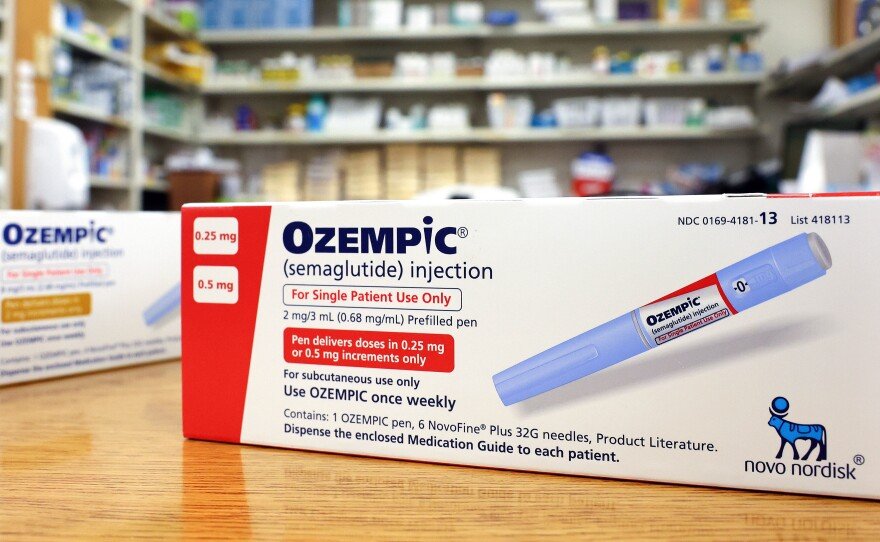
Ozempic and Wegovy are already two of the most searched drugs on the internet — prescribed to over 23% of US households for weight loss and diabetes management. But a landmark study published this week in The Lancet Psychiatry has just added a major new dimension to what these medications appear to do: significantly improve mental health.
Researchers from Karolinska Institute and the University of Eastern Finland analyzed national health records from nearly 95,000 people in Sweden diagnosed with depression or anxiety who were also prescribed antidiabetic medications. They tracked mental health outcomes across periods when patients were taking GLP-1 drugs like semaglutide versus periods when they were not. The numbers were striking.
Semaglutide — the active ingredient in both Ozempic and Wegovy — was associated with a 42% lower overall risk of worsening mental health during treatment periods. That included a 44% lower risk of worsening depression, a 38% lower risk of worsening anxiety, and a 47% lower risk of worsening substance use disorder. Psychiatric hospital visits and work absences due to mental illness also fell significantly.
💡 This study doesn’t prove Ozempic treats depression — it’s observational, not a clinical trial. But the association is strong enough that researchers are calling for dedicated trials to test whether semaglutide could become a formal mental health treatment. That is a significant statement from a journal of The Lancet Psychiatry’s caliber
Why Would a Weight Loss Drug Affect Mental Health?
The connection between metabolic health and mental health is not new — it is, in fact, one of the most robust associations in medicine. People with obesity are 2–3 times more likely to experience depression than those without it. People with type 2 diabetes are at significantly elevated risk for anxiety. The relationship runs both ways — mental health conditions increase the risk of metabolic disease, and metabolic dysfunction drives worse mental health outcomes.
Researchers have proposed two primary mechanisms for why semaglutide might improve mental health specifically:
1. Direct Brain Effects
GLP-1 receptors — the same receptors that semaglutide targets in the pancreas to regulate insulin — also exist in the brain, particularly in regions involved in reward processing, emotional regulation, and appetite control. Scientists believe semaglutide may directly influence these brain circuits, reducing impulsivity, dampening the reward response to addictive substances like alcohol, and modulating the neurochemistry underlying depression and anxiety.
This direct brain effect could explain why the benefits appear to extend beyond simply losing weight — participants showed mental health improvements even in the early phases of treatment before significant weight loss had occurred.
2. Indirect Effects Through Physical Health Improvement
The second pathway is less mysterious: when metabolic health improves, mental health tends to follow. Better blood sugar control, reduced systemic inflammation, lower body weight, improved sleep quality, and increased energy — all of which semaglutide produces — are each independently associated with reduced depression and anxiety. The drug may simply be addressing the physiological conditions that were driving poor mental health in the first place.
🔬 The Lancet Psychiatry, March 2026: Semaglutide use was associated with a 42% lower risk of psychiatric hospitalization and work absences compared to periods off treatment — across nearly 95,000 participants followed through Swedish national health registers from 2009 to 2022.
What This Study Does NOT Mean — The Honest Caveats
This is important. The study is observational — it tracks associations between semaglutide use and mental health outcomes but cannot prove causation. Several important limitations apply:
- Not a clinical trial — participants were not randomly assigned to semaglutide. People who take medication may differ in other ways from those who don’t, and those differences could influence mental health outcomes independently.
- Severe outcomes only — the mental health measures used (hospital visits, work absences) reflect serious deterioration. Milder improvements or worsening in day-to-day mood were not captured.
- Not all GLP-1 drugs showed the same benefit — liraglutide showed only an 18% reduction in mental health risk. Other GLP-1 medications showed no significant benefit. The effect appears specific to semaglutide.
- Not for everyone — some individual reports and case studies have linked semaglutide to worsening depression in people with pre-existing mental health conditions. The FDA previously reviewed safety signals around suicidal ideation in GLP-1 users.
⚠️ Semaglutide is a prescription medication with significant side effects and contraindications. If you are currently taking Ozempic or Wegovy and experiencing mood changes — positive or negative — discuss them with your prescribing physician. Do not start or stop any medication based on this article.
What If You're Not on Ozempic? The Lifestyle Equivalents
The most significant implication of this research isn’t that everyone should get a semaglutide prescription — it’s that the metabolic-mental health connection is real and powerful. The same physiological improvements that semaglutide produces through pharmacology can be achieved, at least partially, through lifestyle — and for many people, lifestyle interventions are accessible right now without a prescription or a waiting list.
Exercise — The Most Direct Mood Intervention Available
Multiple meta-analyses now confirm that resistance training reduces depressive symptoms more effectively than no treatment and comparably to antidepressant medication in people with mild to moderate depression. The mechanism is similar to what semaglutide may be doing through brain chemistry — exercise directly increases BDNF (brain-derived neurotrophic factor), the protein responsible for neuroplasticity and mood regulation.
Even 20–30 minutes of low-impact walking four times per week produces measurable antidepressant effects within weeks. For anyone whose low mood is driven partly by metabolic dysfunction — weight, blood sugar, chronic inflammation — the physical improvements compound the psychological ones.
Anti-Inflammatory Nutrition — Addressing the Root Cause
Chronic inflammation is a shared driver of both metabolic disease and mental illness. The same anti-inflammatory foods that reduce cardiovascular risk and joint pain also reduce the inflammatory cytokines linked to depression and anxiety. The gut-brain axis — the bidirectional communication pathway between your microbiome and your brain — is increasingly understood as a primary mediator of mood, with fiber intake directly supporting the gut bacteria that produce mood-regulating neurotransmitters including serotonin.
Sleep and Hormonal Health
Poor sleep is one of the most direct drivers of both metabolic dysfunction and mental health deterioration. The same consistent sleep habits that support testosterone production and muscle repair also regulate cortisol, reduce inflammatory markers, and stabilize the neurochemistry underlying mood. Semaglutide may improve sleep indirectly through weight loss and metabolic improvement — but consistent sleep timing is achievable for anyone tonight.
Protein Intake and Neurotransmitter Production
Serotonin, dopamine, and GABA — the neurotransmitters most directly involved in depression and anxiety — are synthesised from amino acids. Adequate protein intake provides the raw materials for this synthesis. The protein-first approach to meals ensures these precursors are consistently available — a nutritional foundation that supports both physical and mental health simultaneously.
💡 The lifestyle habits most strongly associated with better mental health — consistent exercise, anti-inflammatory nutrition, adequate sleep, and sufficient protein — are the same habits associated with better metabolic health. Semaglutide may be producing its mental health benefits by improving metabolic function. Lifestyle does the same thing through a different mechanism.
Frequently Asked Questions
Does Ozempic treat depression or anxiety?
Not officially — Ozempic and Wegovy are not approved for mental health conditions. This week’s study found a strong association between semaglutide use and lower rates of worsening depression, anxiety, and addiction in nearly 95,000 people. But it cannot prove the drug caused those improvements. The researchers themselves called for dedicated clinical trials before drawing firm conclusions.
What did the Lancet Psychiatry study actually find?
Published March 19, 2026, the study found that people taking semaglutide during treatment periods had a 44% lower risk of worsening depression, 38% lower risk of worsening anxiety, and 47% lower risk of worsening substance use disorders compared to periods when they were not taking the drug. Psychiatric hospital visits and work absences due to mental illness also fell by 42%.
Could Ozempic make mental health worse?
For some individuals, yes. Case reports have documented worsened depression in people with pre-existing mental health conditions starting semaglutide, and the FDA previously reviewed safety signals related to suicidal ideation in GLP-1 users. The picture is genuinely mixed — the new study shows population-level benefits, but individual responses vary. Anyone on semaglutide who notices mood changes should discuss them with their doctor.
Why would a weight loss drug affect mental health?
Two proposed mechanisms: first, GLP-1 receptors exist in brain regions involved in emotional regulation and reward processing — semaglutide may act directly on these circuits. Second, by improving metabolic health (blood sugar control, reduced inflammation, weight loss, better sleep), it addresses the physiological conditions that drive depression and anxiety in people with obesity and diabetes.
What are the natural alternatives to Ozempic's mental health benefits?
The lifestyle interventions that most closely replicate semaglutide’s mechanisms are: resistance training (directly increases brain-derived neurotrophic factor and reduces depressive symptoms), anti-inflammatory nutrition (reduces the inflammatory cytokines linked to depression), consistent sleep (stabilizes cortisol and mood-regulating neurochemistry), and adequate protein intake (provides amino acid precursors to serotonin and dopamine).
Is Ozempic safe for people with depression or anxiety?
This is a conversation for your prescribing doctor — not a blog article. The new study found population-level benefits in people with depression and anxiety who took semaglutide, but individual responses vary and the FDA has previously flagged psychiatric safety signals for GLP-1 medications. Anyone with a mental health history considering or already taking semaglutide should discuss this explicitly with their physician.
What does this mean for people who can't access Ozempic?
The underlying message is that metabolic health and mental health are deeply connected — and improving one tends to improve the other. The same daily habits that improve blood sugar control, reduce inflammation, support healthy weight, and preserve muscle mass also reduce the physiological drivers of depression and anxiety. Semaglutide reaches those outcomes pharmacologically. Exercise and nutrition reach them through lifestyle.
The Short Version
A major study in The Lancet Psychiatry this week found that semaglutide — the drug in Ozempic and Wegovy — was associated with:
- 44% lower risk of worsening depression during treatment vs. off treatment
- 38% lower risk of worsening anxiety
- 47% lower risk of worsening substance use disorder
- 42% fewer psychiatric hospital visits and work absences
The study was observational — it can’t prove causation. The researchers themselves called for clinical trials before firm conclusions can be drawn. But the association across nearly 95,000 people is striking.
The underlying science points to a deep connection between metabolic health and mental health. Whether through semaglutide or through the lifestyle habits that address the same physiological pathways — exercise, anti-inflammatory nutrition, consistent sleep, and adequate protein — improving how the body functions appears to improve how the mind feels.
Related reading:
- 10 Small Daily Habits That Compound Into Major Health Gains — The Lifestyle Foundation
- 5 Foods to Eat Every Day — Anti-Inflammatory Nutrition That Supports Mood and Metabolic Health
- Fibermaxxing — How Fiber Feeds the Gut Bacteria That Regulate Mood
- The Best Protein Sources — Amino Acids Are the Building Blocks of Serotonin and Dopamine
- Seated Resistance Band Exercises — The Exercise With the Strongest Antidepressant Evidence
- The 12-3-30 Treadmill Workout — Daily Movement as a Mood Intervention
- Top 5 Ways to Reduce Joint Pain Without Medication — How Inflammation Connects Body and Mind
- Testosterone and Aging — How Hormonal Health Underlies Both Metabolic and Mental Wellbeing
- The Longevity Habits — The Lifestyle Framework That Addresses the Root Causes
⚠️ Medical Disclaimer: This article is for informational and educational purposes only and does not constitute medical advice. Ozempic, Wegovy, and all GLP-1 medications are prescription drugs with significant side effects and contraindications. Never start, stop, or change any medication based on information in this article. Always consult your physician or prescribing provider for guidance specific to your health situation.