
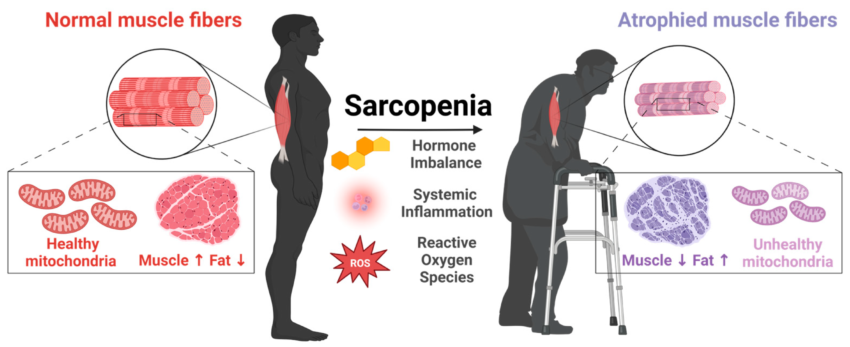
If you are over the age of 60, there is a hidden process happening inside your body that is more predictive of your future independence than your blood pressure or cholesterol levels. It’s called Sarcopenia.
By 2026, research has shown that nearly 50% of adults over 80 suffer from this condition—a progressive loss of skeletal muscle mass and strength. At se7ensymbols.com, we view muscle not as a vanity metric, but as your primary “hardware” for life. Sarcopenia is “biological rust,” and if left unchecked, it makes daily tasks—like getting out of a car or carrying groceries—feel like a marathon.
The good news? Your hardware is remarkably resilient. Here is how to fight back.
The Cost of Losing Your Strength
Sarcopenia isn’t just about “getting weaker.” When you lose muscle, your body loses its primary reservoir for protein and its main driver for metabolism. This leads to:
Increased Fall Risk: Weakened fast-twitch fibers (Type II) make it harder to catch your balance if you trip.
Metabolic Slowdown: Less muscle means fewer calories burned at rest, often leading to weight gain and fat infiltration.
Loss of Autonomy: The “chair stand test” becomes a struggle, eventually requiring assistance for basic mobility.
Strategy 1: Overcoming "Anabolic Resistance" with Protein
The biggest biological hurdle for seniors is Anabolic Resistance. As we age, our muscles become “deaf” to the signals that tell them to grow. To hear that signal again, you need a higher volume of protein than you did in your 30s.
The 30/30/30 Solution
This is why Gary Brecka’s protocol is a game-changer for seniors. By consuming 30g of high-quality protein within 30 minutes of waking, you provide your body with the amino acids (specifically Leucine) needed to “flip the switch” on muscle synthesis.
The Goal: Aim for 1.2g to 1.5g of protein per kilogram of body weight daily.
The Snack: Keep single-ingredient protein snacks like hard-boiled eggs or Greek yogurt on hand to hit your targets without feeling overly full.
Strategy 2: Resistance Training is the Antidote
You cannot “eat” your way out of sarcopenia alone; you must challenge the muscle. Traditional cardio is great for the heart, but it does very little for muscle mass.
Progressive Load: Use our 5-day beginner gym workout plan to focus on “Upper Body Push” and “Lower Body Pull” movements.
The Minimalist Route: If the gym feels intimidating, start with our 10-minute chair exercise guide. These seated movements specifically target the muscles required for standing and walking.
The 3-2-8 Method: This viral method is perfect for seniors. 3 days of weights, 2 days of mobility, and 8,000 steps create a balanced, joint-friendly approach to longevity. See the 3-2-8 Senior Guide here.
Strategy 3: The Role of Recovery and Minerals
Inflammation and poor sleep accelerate muscle breakdown (catabolism). To protect your hard-earned muscle, your recovery must be as disciplined as your training.
Magnesium: This mineral is vital for muscle relaxation and preventing the “night cramps” that ruin senior sleep quality. Read the full guide on Magnesium for Seniors here.
Active Rest: On your off days, follow a 10-minute mobility flow to keep the blood flowing and the joints lubricated.
The Bottom Line
Independence isn’t something that is taken away overnight; it is lost gram-by-gram through muscle atrophy. By prioritizing protein, mastering the 30/30/30 Rule, and staying consistent with resistance training, you can remain the “Chief” of your own life well into your 80s and 90s.
Are you ready to stop the rust? Start your journey today with our Starting Strong 2026 Blueprint.